

For Filipinos, the Philippine passport is more than just a small maroon booklet with gold markings. It’s a key to the world, a symbol of citizenship, and sometimes even a source of pride (or frustration, if you’ve ever wrestled with the DFA appointment system). Whether you’re planning your first international trip, renewing for the tenth time, or simply curious about how powerful the Philippine passport actually is, this guide will walk you through everything you need to know.
Think of this as your ultimate handbook—covering history, types, application and renewal processes, fees, travel hacks, and pro tips that will save you headaches later. By the end, you’ll be a passport pro who can confidently guide others, too.
The Philippine Passport at a Glance
So, what exactly is the Philippine passport?
At its core, it’s an official government document issued by the Department of Foreign Affairs (DFA) that certifies your identity and nationality when you travel abroad. It contains your personal details, photo, signature, and most importantly, your right to be recognized as a Filipino citizen.
A Bit of History
The Philippine passport has come a long way. Early versions were simple travel passes with minimal design and weak security features. Over time, as international travel boomed, the passport evolved into a highly secure, machine-readable booklet. Today’s Philippine passport is an e-passport, meaning it’s embedded with a microchip containing your biometric data—making it harder to forge and easier to verify at immigration counters.
Fun fact: The DFA updated the passport design in 2016, showcasing Filipino heritage and landmarks on its pages, from the Banaue Rice Terraces to Vigan’s cobblestones.
Parts of the Philippine passport

1. Cover
- Front Cover: Usually dark blue for regular passports, red for official, and maroon for diplomatic.
- Insignia & Text: Features the Philippine coat of arms and the words “Republic of the Philippines” and “Passport”.
- Purpose: Identifies the document type and issuing country immediately.

2. Data Page / Bio Page
This is the critical page that contains your personal and identifying information:
- Photograph: Your passport photo for identification.
- Passport Type & Code: Usually “P” for personal/regular passports.
- Passport Number: Unique identifier for your passport.
- Full Name: Last name, first name, and middle name.
- Nationality: Usually Filipino.
- Date of Birth: For age verification and identification.
- Place of Birth: City/Province and country.
- Sex/Gender: Male or female.
- Date of Issue: When the passport was issued.
- Date of Expiry: When the passport becomes invalid.
- Issuing Authority: Usually the Department of Foreign Affairs (DFA) of the Philippines.
- MRZ (Machine Readable Zone): Two lines of code at the bottom of the page for scanning at immigration.
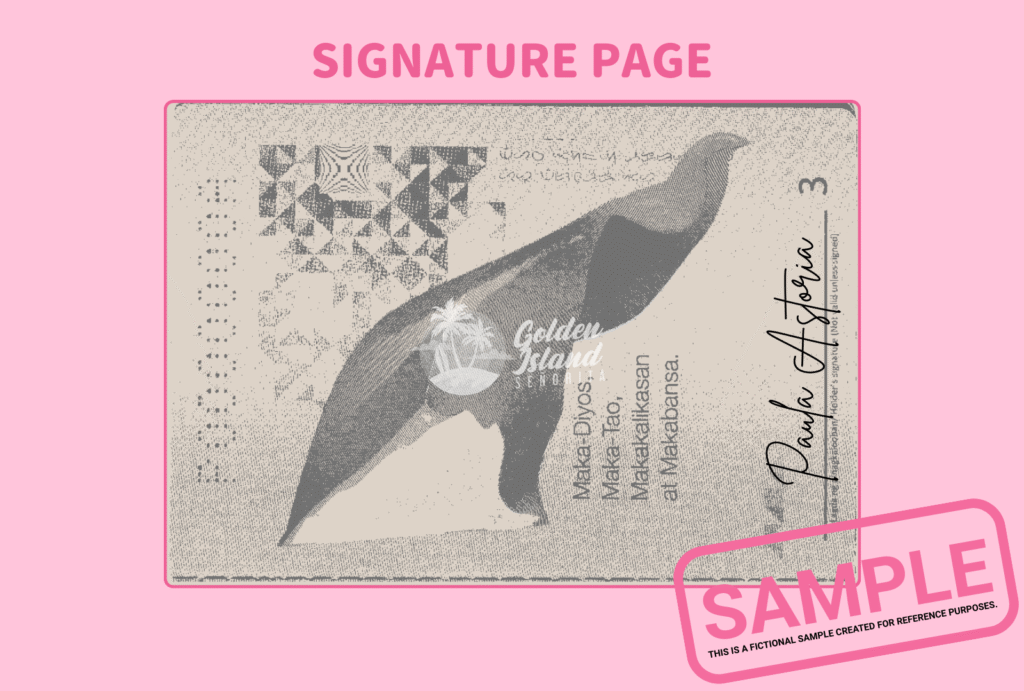
3. Signature Page
- Holder’s Signature: Required to validate the passport.
- Note: Some passports also include a warning or instruction for border authorities to allow the holder to pass.

4. Visa Pages
- Purpose: Space for visas, entry/exit stamps, and endorsements.
- Quantity: Usually 32 pages for regular passports (newer e-passports may vary).
- Design: Often includes Filipino symbols, landmarks, or cultural elements.
5. Endorsements / Observations Page
- Purpose: Space for official notes, extensions, amendments, or endorsements made by authorities.
6. Security Features
Not exactly a “part,” but essential:
- Holograms & Watermarks: Prevent forgery.
- Embedded Chip (for e-passport): Stores biometric data like fingerprints and photo.
- Microprinting & UV Features: Visible only under special light to verify authenticity.
7. Back Cover
- Often contains instructions for lost or stolen passports, contact info for the DFA, or additional security elements.
Types of Philippine Passports
Not all passports are created equal. In the Philippines, there are different types, depending on who you are and why you’re traveling:
- Regular Passport – For ordinary Filipino citizens traveling for tourism, work, study, or migration.
- Official Passport – Issued to government employees traveling abroad for official missions.
- Diplomatic Passport – For high-ranking officials like ambassadors, cabinet members, and diplomats.
- E-passport (Electronic Passport) – All modern Philippine passports fall under this. It includes a chip with your biometrics, making it ICAO-compliant (International Civil Aviation Organization).
For 99% of Filipinos, the regular passport is what matters.
Passport Validity and Power
One common mistake travelers make? Forgetting about validity rules.
Validity Rules
- For adults (18 and above): 10 years
- For minors (below 18): 5 years
Most countries require that your passport be valid for at least six months beyond your intended stay. Even if you still have a few months left before expiration, airlines may deny you boarding. Always check early.
The Power of the Philippine Passport
According to the Henley Passport Index (2025), the Philippine passport allows visa-free or visa-on-arrival access to around 70+ countries. That’s modest compared to Japan or Singapore, but still powerful enough to give Filipinos access to parts of Southeast Asia, South America, and select African and Middle Eastern countries.
Examples of visa-free destinations for Filipinos include:
- ASEAN neighbors (Thailand, Vietnam, Singapore, Malaysia, Indonesia, Brunei, Cambodia, Laos, Myanmar)
- South America (Brazil, Colombia, Peru, Bolivia)
- Some Pacific Islands (Micronesia, Palau, Vanuatu, Samoa)
It may not be the “golden passport” like Germany’s, but it gets you to many beautiful destinations without too much hassle.
How to Apply for a Philippine Passport (First-Time Applicants)
Now, let’s get to the meat of it. If you’re a first-time applicant, here’s a step-by-step guide:
- Secure an online appointment.
- Go to the DFA Passport Appointment System online.
- Choose a consular office near you.
- Pick a date and time.
- Pay the processing fee.
- Prepare the requirements.
- Birth Certificate (PSA-issued, authenticated).
- Valid ID (UMID, driver’s license, PhilID, SSS, PRC, etc.).
- Supporting documents if applicable (marriage certificate, proof of dual citizenship, etc.).
- Go to your appointment.
- Arrive early.
- Wear proper attire (no spaghetti straps, plunging necklines, sleeveless tops).
- Bring original documents + photocopies.
- Biometrics capture.
- Photo (no glasses, no colored contact lenses).
- Fingerprints.
- Digital signature.
- Wait for release.
- Regular processing: 12 working days.
- Expedited processing: 6–7 working days.
- For OFWs and emergency cases: faster processing may be available.
How to Renew a Philippine Passport
Renewing is easier than applying for the first time.
Requirements for Renewal
- Old passport (must be surrendered).
- Confirmed DFA appointment.
- Valid ID.
Lost or Damaged Passport
If your passport is lost, you’ll need:
- Affidavit of Loss.
- Police report (if abroad, embassy report).
- Additional processing time and clearance from DFA.
Special Cases
- Name change (due to marriage, annulment, etc.): Provide marriage certificate or court documents.
- Minor turning 18: Renew for a 10-year validity.
Passport Fees & Processing Time
As of 2025, here are the fees:
- Regular processing (12 working days): PHP 950.00
- Expedited (6–7 working days): PHP 1,200.00
- Lost or damaged passport penalty: Additional PHP 350.00
For overseas applications at Philippine Embassies/Consulates: Fees may vary depending on location and currency exchange.
Where to Apply
- DFA Aseana (main office).
- DFA Consular Offices nationwide (often inside malls like SM or Robinsons).
- Overseas: Philippine Embassies and Consulates process applications and renewals for Filipinos abroad.
Common Passport Issues and Solutions
- Lost Passport Abroad – Immediately report to the nearest Philippine Embassy. You’ll likely be issued an Emergency Travel Document (ETD) to return home.
- Damaged Passport – Needs replacement. The DFA won’t accept torn or water-damaged passports.
- No valid IDs – Apply first for a primary ID like PhilSys or UMID before applying for a passport.
- Wrong details printed – Report errors immediately for correction.
Pro Tips and Travel Hacks
- Always check your passport 6 months before your trip. Airlines won’t let you fly if validity is less than that.
- Photocopy your passport and keep a digital copy in your email/cloud.
- Invest in a passport holder to protect from wear and tear.
- Don’t laminate your documents. The DFA doesn’t accept laminated birth or marriage certificates.
- Schedule your appointment early. DFA slots get snapped up fast, especially before summer and Christmas.
- If traveling often, get a 10-year passport so you’re not renewing every few years.
FAQs About the Philippine Passport
1. Do I need a passport for domestic travel?
No. A government-issued ID is enough.
2. Can I have two Philippine passports?
Generally no, unless granted for special circumstances (e.g., frequent travelers with overlapping visa requirements).
3. What if I lose my passport right before my flight?
You’ll need to cancel your trip and apply for a replacement or ETD. Always keep it safe.
4. Can minors travel abroad with just a passport?
No. They also need a DSWD travel clearance if not accompanied by parents.
5. Can I apply without a birth certificate?
No. The PSA-issued birth certificate is mandatory unless you’re renewing an undamaged passport with identical details.
Conclusion
The Philippine passport may just be a small maroon booklet, but it carries immense weight. It represents your identity as a Filipino, serves as your pass to international adventures, and safeguards your rights abroad. From applying and renewing to protecting and maximizing it, handling your passport responsibly is one of the most important life skills for a Filipino traveler.
So, whether you’re flying out for a beach holiday in Thailand, a backpacking trip in South America, or a long-term career move abroad, remember: your passport is more than a piece of paper. It’s your personal key to the world. Guard it well, keep it valid, and let it take you to places you’ve only dreamed of.
