
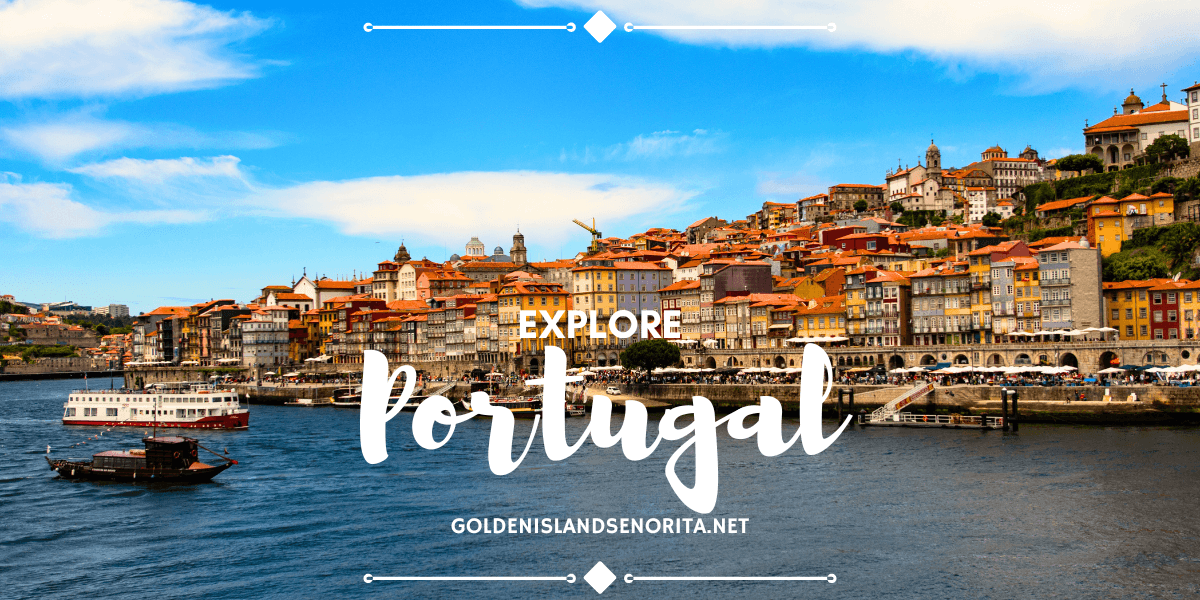
Your Ultimate Portugal Travel Guide 2026: Everything You NEED to Know Before You Go!
I’ll be honest with you — Portugal ruined me. After spending weeks there, I came home and spent the next month comparing every sunset, every plate of food, and every cobblestone street to what I had just left behind. Nothing quite measured up.
Portugal is one of Europe’s oldest nations, yet somehow one of its best-kept secrets. Nestled at the westernmost edge of continental Europe, it is a country that rewards slow travel. It doesn’t scream for your attention the way Paris or Rome does. Instead, it pulls you in quietly — with a custard tart warm from the oven, a melancholic fado melody drifting from an open window, or a viewpoint over Lisbon where the terracotta rooftops seem to go on forever. Before you know it, you’re extending your trip, looking up apartment rentals, and reconsidering your entire life plan.
Whether you’re dreaming of surfing the wild Atlantic coast, sipping wine in the Douro Valley, or wandering centuries-old castle walls in the Alentejo, this guide will walk you through everything you need to know before you land and while you’re on the ground. Think of it as advice from a well-traveled friend who genuinely wants your trip to go smoothly.
Let’s dive in.

Travel Essentials for Visitors
Visa Policy
Portugal is a member of the European Union and part of the Schengen Area, which means your visa situation depends entirely on where you’re from.
EU/EEA and Swiss citizens can enter Portugal freely with just a valid national ID or passport — no visa required, no time limit.
Citizens from countries like the United States, Canada, Australia, the United Kingdom, Japan, South Korea, and most of Latin America can enter visa-free for up to 90 days within any 180-day period under the Schengen Agreement. This is for tourism and short stays only — you cannot work on this arrangement.
Citizens from other countries — including the Philippines, India, China, and much of Africa — will typically need to apply for a Schengen Short-Stay Visa (Type C) before traveling. You’ll need to apply at the Portuguese consulate or embassy in your home country well in advance. Required documents generally include a valid passport, proof of accommodation, return flight tickets, travel insurance with a minimum €30,000 medical coverage, proof of sufficient funds, and a completed application form.
My advice: Apply at least 6–8 weeks before your trip. Processing times vary, and there’s nothing worse than a delayed visa ruining a carefully planned itinerary. Always check the official website of the Portuguese Embassy in your country for the most current requirements, as visa policies can change.
One more thing worth knowing: Portugal introduced a Digital Nomad Visa (D8 Visa) in 2022, which is ideal if you’re planning a longer stay while working remotely. It’s a proper legal route for remote workers, and Portugal has been actively welcoming this crowd.
Travel Insurance
Please do not skip travel insurance. I know it feels like an unnecessary expense when you’re already budgeting for flights and hotels, but it is genuinely one of the wisest investments you’ll make for your trip.
For Schengen visa applicants, travel insurance with a minimum coverage of €30,000 for medical emergencies and repatriation is a mandatory requirement. But even if you’re traveling visa-free, I’d strongly recommend getting comprehensive coverage that includes:
- Medical expenses and hospitalization — Healthcare in Portugal is good, but as a foreign visitor, you’ll likely be using private facilities, which can be expensive.
- Trip cancellation and interruption — Flights get canceled, family emergencies happen.
- Baggage loss or theft — Lisbon and Porto are generally safe, but petty theft can occur in tourist-heavy areas.
- Emergency evacuation — Particularly important if you plan to hike in remote areas like the Azores or Madeira.
Reputable providers like World Nomads, Allianz, AXA, and SafetyWing are popular among travelers. Always read the fine print and understand what is and isn’t covered before purchasing.
Geography
Location
Portugal occupies the southwestern corner of the Iberian Peninsula, sharing its eastern and northern borders with Spain. To the west and south, it faces the Atlantic Ocean — a fact that shapes everything about Portuguese culture, history, cuisine, and weather.
The country covers roughly 92,000 square kilometers, making it slightly smaller than Indiana in the US, yet it packs an extraordinary variety of landscapes into that space. From the lush, green hills of the Minho region in the north, to the dramatic cliffs of the Algarve coast in the south, to the sun-scorched plains of the Alentejo in the interior — Portugal is a genuinely diverse place.
Beyond the mainland, Portugal also includes two autonomous island regions: Madeira, located about 1,000 km southwest of Lisbon in the Atlantic, and the Azores, an archipelago of nine volcanic islands sitting roughly 1,500 km west of Lisbon. Both are Portuguese territory and offer experiences dramatically different from the mainland.
The capital, Lisbon, sits along the northern bank of the Tagus River estuary, just 12 km from the Atlantic coast. Porto, the second-largest city, sits at the mouth of the Douro River in the northwest.
Weather
Portugal enjoys one of the mildest climates in Europe, which is part of its enduring appeal. But “mild” doesn’t mean uniform — the weather varies noticeably from region to region and season to season.
Spring (March–May): This is one of the best times to visit. Temperatures are comfortable — ranging from 15°C to 22°C (59°F to 72°F) — the landscape is beautifully green, wildflowers bloom everywhere, and the tourist crowds haven’t arrived in full force yet. You might encounter some rain, especially in the north, but it tends to be brief.
Summer (June–August): Peak tourist season. Temperatures in Lisbon and the Algarve regularly hit 30°C–35°C (86°F–95°F), and the southern coast can occasionally touch 40°C (104°F). The Algarve beaches are glorious but packed. If you go in summer, book accommodation well in advance and be prepared for higher prices. The north of Portugal and the Azores remain somewhat cooler.
Autumn (September–November): Arguably the most underrated time to visit. September still feels like summer, temperatures have dropped to a pleasant 20°C–27°C (68°F–80°F), the crowds have thinned, and prices start to drop. Wine harvest season in the Douro Valley is happening — a magical time to be there.
Winter (December–February): Mild compared to the rest of Europe, but wetter and windier, especially in the north. Lisbon winters hover around 10°C–15°C (50°F–59°F). The south (Algarve) is popular with European retirees in winter for its sunshine and temperatures that can reach 17°C–19°C (63°F–66°F) on good days. If you’re budget-conscious, winter offers the best deals.
Demographics
Language
The official language is Portuguese (Português) — a Romance language with deep roots in Latin, shaped by centuries of Atlantic exploration and global empire. It is not Spanish, and Portuguese speakers will politely (and sometimes firmly) remind you of that distinction. The two languages share some vocabulary, but the pronunciation is quite different.
The good news for English speakers: English is widely spoken, particularly in Lisbon, Porto, the Algarve, and most major tourist areas. Portugal actually ranks among the top non-native English-speaking countries in Europe. Younger generations especially tend to be comfortable communicating in English.
That said, making even a small effort to speak Portuguese goes a long way. Learning a few basic phrases — “Olá” (hello), “Obrigado/Obrigada” (thank you, for men and women respectively), “Por favor” (please), “Faz favor” (excuse me/waiter’s attention), and “Fala inglês?” (do you speak English?) — will earn you genuine smiles and warm treatment from locals.
One nuance worth noting: European Portuguese sounds noticeably different from Brazilian Portuguese, which is what most language apps teach. European Portuguese has a more closed, swallowed sound — some describe it as resembling Slavic languages more than Spanish. Don’t be surprised if your Brazilian Portuguese sounds amusing to locals; they’ll appreciate the effort all the same.
Religion
Portugal is a historically Roman Catholic country, and the Church has played a central role in shaping its culture, architecture, art, and calendar. The vast majority of the population identifies as Catholic, though active church attendance has declined among younger generations.
You’ll feel this Catholic heritage everywhere — in the stunning abbeys and monasteries that dot the landscape, in the local festivals (festas) organized around saints’ days, in the azulejos (blue tiles) depicting religious scenes on church facades, and in the reverent hush of a medieval cathedral.
That said, modern Portugal is a secular, constitutionally pluralist state with solid protections for religious freedom. LGBT+ rights are legally recognized, and the country is generally regarded as one of the most open and tolerant in Europe.
As a visitor, simply be respectful when entering religious sites. Dress modestly (shoulders and knees covered), keep your voice low, and avoid visiting during active religious services unless you’re participating.
Infrastructure
Connectivity
Portugal has solid telecommunications infrastructure, especially in urban areas. 4G coverage is widespread across the country, and 5G is available in major cities including Lisbon, Porto, Braga, and the Algarve corridor.
SIM cards are easy and affordable to get. The main providers are NOS, MEO, and Vodafone Portugal. You can buy prepaid SIM cards at airports, mobile stores, and even some supermarkets. Expect to pay around €10–€20 for a SIM with a reasonable data allowance. Make sure your phone is unlocked before you travel.
Wi-Fi is widely available and generally reliable in hotels, hostels, cafés, restaurants, and even many public spaces. Lisbon and Porto have invested in public Wi-Fi in busy tourist areas, though connectivity can be inconsistent in rural regions and smaller villages.
EU roaming rules mean that travelers from EU member states can use their home data plans in Portugal without extra charges — a great perk if you’re coming from elsewhere in Europe.
Transportation
Getting around Portugal is relatively straightforward, though your experience will vary depending on whether you’re sticking to cities or exploring the countryside.
Flights: TAP Air Portugal is the national carrier, with Lisbon (LIS) and Porto (OPO) as the main international hubs. Faro (FAO) in the Algarve also receives many direct European flights, particularly in summer. Budget airlines like Ryanair and easyJet connect Portugal to many European cities cheaply.
Trains: The national rail operator CP (Comboios de Portugal) runs a reasonably priced and comfortable network connecting the major cities. The Lisbon–Porto Alfa Pendular (high-speed service) takes about 2 hours 45 minutes and is a pleasure to ride. Book tickets in advance on the CP website for the best prices. The rail network thins out considerably in rural areas, so you’ll need other options for off-the-beaten-path destinations.
Buses: Rede Expressos is the main intercity bus company, covering routes that trains don’t reach. Buses are comfortable, affordable, and a great option for reaching smaller towns and villages.
Metro and urban transit: Lisbon and Porto both have metro systems that are efficient and easy to navigate. Lisbon’s network is particularly useful for tourists, connecting the airport, central Lisbon, and the waterfront. Purchase rechargeable Viva Viagem (Lisbon) or Andante (Porto) cards to use across metro, bus, tram, and ferry services.
Trams: Lisbon’s historic Tram 28 is iconic and worth riding at least once — though be aware it’s extremely popular with tourists, which makes it a prime target for pickpockets. Keep your bag in front of you.
Car rental: If you want to explore rural Portugal, the Douro Valley, the Alentejo plains, or the lesser-visited corners of the Algarve coast, renting a car is by far the best option. Roads are generally good, driving is on the right, and fuel prices are comparable to the rest of Western Europe. Tolls (portagens) are common on motorways — many are electronic only, so check with your rental company about the toll payment system.
Ferries: Regular ferry services cross the Tagus River in Lisbon (a lovely commuter experience that doubles as a free sightseeing ride) and connect the mainland to the Azores and Madeira by sea, though most visitors fly to the islands.
Sockets and Adapters
Portugal uses the Type F plug (also known as the Schuko plug) — two round pins, sometimes with a grounding pin. This is the standard across most of Continental Europe.
The voltage is 230V and the frequency is 50Hz. If you’re coming from North America (where voltage is 110–120V), check that your devices are dual-voltage (most modern laptops, phones, and camera chargers are — look for “100–240V” on the charger). If they’re not, you’ll need a voltage converter in addition to a plug adapter.
Bring a universal travel adapter to be safe, or pick one up cheaply at Lisbon airport or any electronics store upon arrival.
Culture and Society
Cuisine
Portuguese food is, in my personal opinion, one of the most underappreciated cuisines in the world. It is hearty, honest, and deeply satisfying — built on quality ingredients rather than elaborate technique.
Pastéis de nata (custard tarts) are perhaps Portugal’s most famous export, and rightly so. Warm, crispy-edged, with a slightly caramelized, egg-custard center, dusted with cinnamon — they are perfect. The original and best come from Pastéis de Belém in Lisbon, where they’ve been making them since 1837. Queue for them. They are worth every minute.
Bacalhau (salted codfish) is the soul of Portuguese cooking. There’s a saying that there are 365 ways to cook bacalhau — one for every day of the year. Bacalhau à Brás (shredded cod with scrambled eggs and fried potatoes), Bacalhau com Natas (cod with cream), and Bacalhau à Lagareiro (oven-roasted with olive oil) are essential tries.
Francesinha is Porto’s gift to the sandwich world — layers of meat (ham, sausage, steak) stacked between bread, covered in melted cheese, and drowned in a spiced tomato-and-beer sauce. It is absurd and magnificent.
Grilled fish — fresh sardines, sea bass (robalo), sea bream (dourada) — are everywhere along the coast and are invariably excellent. Don’t miss the Festa de Santo António in June when Lisbon fills with the smoky, magical scent of sardines grilling on every street corner.
Portuguese wine is world-class and significantly underpriced. Vinho Verde from the northwest is light, slightly sparkling, and perfect for summer. Douro reds are bold and structured. Alentejo wines are rich and food-friendly. And of course, Port wine — the fortified wine aged in Vila Nova de Gaia, across the river from Porto — is a revelation sipped at its source.
Tourism
Portugal’s tourism industry is mature and well-organized, making it easy to navigate as a visitor. The country’s main tourist board, Turismo de Portugal, maintains visitor information offices in major cities and towns.
Top destinations include Lisbon (Alfama, Belém, LX Factory, Sintra day trips), Porto (Ribeira waterfront, wine cellars, Livraria Lello), the Algarve (Lagos, Sagres, Tavira, the Benagil Cave), the Douro Valley (river cruises, quintas), Sintra (fairytale palaces), Óbidos (a walled medieval town), and the Azores (volcanic lakes, whale watching, thermal pools).
Portugal is generally well set up for independent travelers. Signage is often bilingual, booking platforms work seamlessly, and the tourism infrastructure in popular areas is excellent.
Etiquette & Unwritten Rules
Portuguese people are warm, welcoming, and deeply hospitable — but like every culture, there are unspoken social codes worth knowing.
- Greetings matter. In Portugal, greetings are taken seriously. When you enter a small shop, café, or restaurant, say “Bom dia” (good morning), “Boa tarde” (good afternoon), or “Boa noite” (good evening). Leaving without a “Obrigado/Obrigada” and a farewell is considered rude. These small courtesies are genuinely important.
- Don’t rush. Portuguese culture values a slower, more deliberate pace of life — particularly at the table. A meal is not something to race through. Lingering over food and conversation is the point. Asking for the bill (a conta, se faz favor) before you’ve finished eating may seem abrupt.
- Fado deserves silence. If you attend a fado performance, understand that fado is treated with near-sacred reverence. Talking, laughing loudly, or being on your phone during a performance is deeply disrespectful. Listen. Feel it. That’s what you’re there for.
- Don’t compare them to Spain. Just… don’t. Portugal has its own distinct identity, history, and culture, and conflating it with Spain (or assuming Spanish customs apply) will not endear you to locals.
- Queuing is expected. Wait your turn politely. Cutting in line is frowned upon.
Sundays & Siesta Hours
Portugal is not as strict about the midday rest (siesta) as Spain, but you will notice a slower pace in smaller towns and villages between roughly 1:00 PM and 3:00 PM, when many locally run shops close for lunch. Larger cities, shopping malls, and tourist-focused businesses typically stay open through the afternoon.
Sundays are a different story. In smaller towns and villages, many shops, markets, and non-essential services shut down entirely. Plan accordingly — if you need to stock up on supplies or visit a pharmacy, Saturday is your safer bet. Major supermarkets, restaurants, and tourist attractions in cities generally remain open on Sundays, but hours may be reduced.
Religious holidays (feriados) also cause widespread closures. Portugal has 13 public holidays per year, and on those days, many businesses operate on reduced hours or close entirely.
Finance
Currency
Portugal uses the Euro (€), as it is a member of the Eurozone. Coins come in 1, 2, 5, 10, 20, and 50 cent denominations, as well as €1 and €2. Notes come in €5, €10, €20, €50, €100, €200, and €500 denominations (though €200 and €500 notes are rarely used in everyday transactions).
If you’re coming from outside the Eurozone, exchange currency before you travel or use an ATM upon arrival for the best rates. Airport currency exchange kiosks typically offer poor rates — use them only if absolutely necessary.
Card Payments
Portugal is increasingly cashless, and credit or debit cards are accepted widely in Lisbon, Porto, and major tourist areas — including most restaurants, hotels, shops, and supermarkets.
Visa and Mastercard are universally accepted. American Express is less so — always have a backup card. Contactless payments (including phone-based payments like Apple Pay and Google Pay) are common and widely available.
However, carry some cash for smaller purchases — particularly in rural areas, markets, small family-run cafés, and churches that charge small entrance fees. Some traditional tascas (local taverns) and village shops remain cash-only.
My Tip: Use a travel-friendly card with no foreign transaction fees to avoid extra charges on every purchase. Cards from providers like Wise, Revolut, or Charles Schwab (for US travelers) are popular choices.
Tipping
Tipping in Portugal is appreciated but not obligatory in the way it is in the United States. Service staff earn a living wage (unlike in the US tip-dependent model), so tipping is genuinely a gesture of gratitude rather than a social obligation.
In practice: rounding up the bill or leaving 5–10% for good restaurant service is entirely appropriate and warmly received. For exceptional service, tip generously — it will be noticed and remembered. For taxis, rounding up the fare is the norm. For hotel housekeeping, a euro or two per day is a kind gesture.
Don’t feel pressured to tip if service was mediocre, and don’t feel guilty for not tipping at all in casual settings like coffee at a counter or a quick bite at a pastelaria.
Banks and ATMs
Bank branches (Millennium BCP, Caixa Geral de Depósitos, Santander, Novo Banco, BPI) are well distributed in cities and larger towns. Most are open Monday to Friday, 8:30 AM to 3:00 PM — they close early by many countries’ standards, so plan ahead if you need in-branch services.
Currency exchange offices (casas de câmbio) exist in tourist areas, but as mentioned, rates vary widely. For the best rates, use ATMs with your home bank card, or come with Euros already in hand from a reputable exchange service in your home country.
