
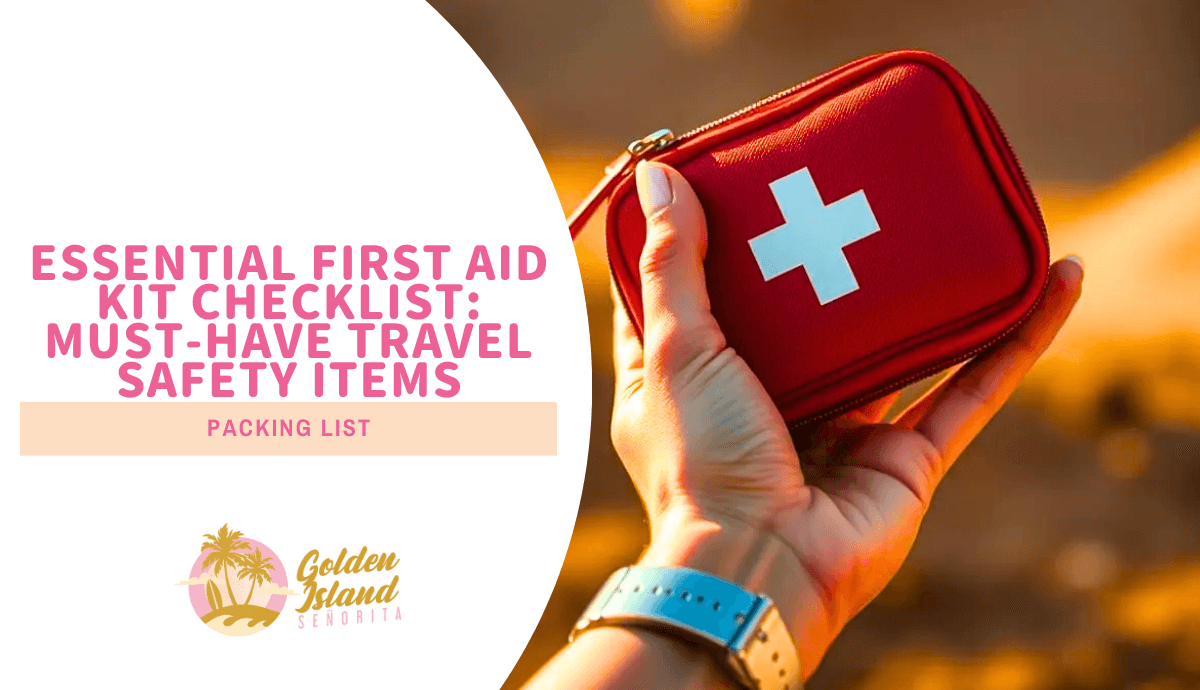
Essential Travel First Aid Kit Checklist: Must-Have Safety Items
Let’s guess how your trip planning has gone so far. You’ve compared forty-seven hotels, bookmarked a hundred and twelve restaurants, and spent an entire evening debating whether you really need a third pair of shoes. (You don’t. Nobody does. But we’ve all been there.) Meanwhile, your Travel First Aid Kit consists of one slightly fossilized adhesive bandage living in the junk drawer between a dead battery and a takeout menu from 2019.
Don’t panic. This is a judgment-free zone. Most of us treat health preparation the way we treat flossing: we know it matters, we fully intend to do it, and then somehow we just… don’t. But here’s the thing. A well-stocked Travel First Aid Kit weighs less than your souvenir snow globe, costs less than one overpriced airport sandwich, and can turn “ruined vacation” into “mildly annoying Tuesday.”
In this guide, we’ll walk through everything you need to know: why a smart Travel First Aid Kit depends on where and how you’re traveling, which medicines deserve a seat on the plane, which gadgets earn their space, and how to organize it all so your bag doesn’t turn into a rattling, pharmacy-shaped lump. We’ll also meet a traveler named Marco, whose story will make you want to open a new tab and go shopping immediately.
Grab a snack. (Not from the airport. We’ve discussed this.) Let’s get you ready.
A quick note: this article is general travel advice with a generous sprinkle of humor, not medical advice. Chat with your doctor or a travel clinic before you go, especially if you have a health condition, take prescription medication, or are traveling with children.
🩹The Tale of Marco and the Blister That Ate Lisbon
Marco is a made-up traveler, but his story is a mashup of things that happen to real people every single day. Perhaps you know him. Perhaps you are him. (Hi, Marco. We love you. Please buy bandages.)
Marco landed in Lisbon on a sunny Saturday morning, glowing with confidence. He had a color-coded itinerary, a camera roll full of future Instagram posts, and a brand-new pair of sandals he’d bought the night before “for the vibes.” Breaking in shoes first? Marco considered that a rumor. As for medical preparation, Marco’s entire Travel First Aid Kit was a positive attitude and half a packet of tissues.
By lunchtime, Lisbon’s famously hilly, cobblestone-covered streets had introduced themselves to Marco’s heels. By mid-afternoon, a blister the size of a grape had appeared, which Marco described as “fine.” By 4 p.m., it had grown to the size of a plum and was staging a full-scale rebellion. Marco limped into a café, ordered a coffee, and attempted a repair using a paper napkin and a hair tie from the bottom of his bag. The result looked less like first aid and more like a failed craft project.
Then things escalated. That evening, a bold decision involving questionable street snacks and an overconfident stomach left Marco curled up in his hotel bathroom at 2 a.m., negotiating with the universe. He had no oral rehydration salts, no anti-diarrheal medicine, and no painkillers. The nearest pharmacy was closed for the weekend, and the on-duty one was a long, wincing taxi ride across town, which Marco’s stomach vetoed on principle.
By Monday, the blister had turned red, swollen, and hot to the touch, so Marco finally dragged himself to a clinic. The visit cost money, the treatment cost more money, and he lost two full days of sightseeing to a hotel bed and a Portuguese soap opera he couldn’t understand but, by his own report, followed emotionally. His prepaid day tour left without him. His dignity left shortly after.
The painful irony? A basic Travel First Aid Kit with blister pads, rehydration salts, and a few stomach-settling tablets would have cost about the same as a mediocre pizza and fit in the palm of his hand. Marco now owns a Travel First Aid Kit the way some people own a smoke detector: religiously, and with deep respect for what happens without one.
The moral of the story is simple. The best time to build a Travel First Aid Kit is before you need one. The second-best time is also before you need one, because you’ll be too busy limping.
🤔Traveller’s First Aid Kit Considerations
Before you sprint to the pharmacy and buy one of everything, take a breath. A Travel First Aid Kit isn’t a one-size-fits-all situation. The kit for a weekend in Paris looks very different from the one for three weeks in the mountains. Here are the big questions to ask yourself first.
Where are you going?
Your destination is the biggest factor. Headed to a city with a pharmacy on every corner? You can go lean. Heading to a remote island, a mountain trail, or anywhere “the nearest clinic” involves a boat? Pack more. Tropical destinations call for insect repellent, rehydration salts, and serious sun protection. High altitudes call for a chat with your doctor. Cold climates call for thinking about chapped skin, frostbite, and how to warm up fast. Whatever the destination, your Travel First Aid Kit should match the place, not just your packing mood.
How long are you staying?
A weekend getaway needs the basics. A three-month backpacking odyssey needs a bigger stash and a refill plan. Longer trips usually mean a bigger Travel First Aid Kit, but they also mean more chances to restock locally, so you don’t need to haul a year’s supply of bandages across four continents. Think “enough to bridge the gap,” not “enough to open a clinic.”
Who’s coming along?
Kids need child-friendly formulas and dosing (ask your pediatrician before you go). Older travelers may carry more prescriptions and need a solid plan for them. Anyone with allergies needs antihistamines and, if prescribed, an epinephrine auto-injector within reach. And that one friend who attracts every mosquito in a ten-mile radius needs extra after-bite cream. You know who you are. A family Travel First Aid Kit will look different from a solo one, so build yours around the people actually going.
What will you be doing?
Lounging by a pool and scaling a volcano involve very different risks. Hiking means blisters and twisted ankles. Beaches mean sunburn and the occasional mysterious sting. Road trips mean motion sickness and gas-station snacks of dubious character. Let your itinerary shape your Travel First Aid Kit, and you’ll pack what you’ll actually use.
What are the rules?
Here’s the unglamorous part: regulations. Most airlines limit liquids in carry-on bags to small containers (usually 100 ml or 3.4 oz), with exceptions for medicines that you may need to declare. Scissors with long blades may get confiscated. Prescription medicines should stay in their original labeled packaging, ideally with a copy of the prescription or a doctor’s letter. And some medicines that are over the counter at home are restricted or even banned abroad, so check your destination’s official guidance or your embassy’s website. Few things ruin a vacation like a customs officer who has questions about your cold medicine.
How’s your own health?
Book a visit with your doctor or a travel clinic four to six weeks before departure for vaccines, prescriptions, and destination-specific advice. Carry a written list of your conditions, allergies, and medications too. Future-you, possibly in a foreign emergency room, will be grateful.
How much space (and patience) do you have?
Be honest with yourself. A Travel First Aid Kit that’s too heavy gets left at the hotel, and a kit left at the hotel is just an expensive paperweight with great intentions. The golden rule: pack for the likely, not the apocalyptic. Your Travel First Aid Kit should handle blisters, bites, upset stomachs, headaches, and scrapes, and help you buy time while you reach real medical help for anything serious. It is not a field hospital, and you are not auditioning for a survival show.
🧳What Should Be in a Traveller’s First Aid Kit?
Alright, time for the main event. Think of this as your shopping list. Every Travel First Aid Kit is a little different, but the items below cover the most common travel mishaps. We’ve split them into medicines and gear so you can tick things off like a very organized, mildly paranoid superhero.
💊Medicines to Pack in Your Traveller’s First Aid Kit
First up: the stuff you swallow, sip, or slather. Always read labels, follow the dosing directions, and check with a pharmacist or doctor if you take other medications or have health conditions. When in doubt, ask. Pharmacists are basically wizards in lab coats.
- Pain relievers and fever reducers. Paracetamol (acetaminophen) and ibuprofen are the dynamic duo for headaches, muscle aches, toothaches, and fevers, and a staple of any Travel First Aid Kit. Pick what suits you and your doctor’s advice, and follow the label exactly. Taking too much is not a personality trait.
- Antihistamines. Handy for seasonal allergies, itchy bites, and mild allergic reactions. Heads-up: some cause drowsiness, which is wonderful on a long-haul flight and less wonderful before you drive a rented scooter. Non-drowsy options exist.
- Anti-diarrheal medicine and oral rehydration salts. The unofficial MVPs of any Travel First Aid Kit. Food adventures are glorious until they aren’t. Oral rehydration salts replace lost fluids and electrolytes, and anti-diarrheal tablets can help you survive a travel day. If you have a high fever, blood in your stool, or symptoms that drag on, skip the self-treatment and see a doctor.
- Antacids. For when that fourth helping of the local specialty fights back.
- Motion sickness remedies. Boats, buses, winding mountain roads, and that one taxi driver who treats every street like a Formula One track. Take them before the journey, not after the first wave of regret.
- Constipation relief. No travel blog ever mentions this, yet everyone needs it by day four. New food, new water, and a long flight can slow things down, so a small supply of something gentle is a quiet act of kindness to yourself.
- Cold and cough remedies. Throat lozenges, saline nasal spray, and a decongestant (check local rules, because some ingredients are restricted in certain countries). Airplanes are basically flying petri dishes with peanuts, so a sniffle-ready Travel First Aid Kit earns its keep.
- Topical treatments. Hydrocortisone cream for itchy bites and rashes, antibiotic ointment for minor cuts and scrapes, and an antifungal cream if you’re headed somewhere hot and humid.
- Eye drops. Dry cabin air, dust, and sunscreen that wandered into your eyes are all good reasons to pack lubricating drops.
- Your personal prescriptions. These are the VIPs of your Travel First Aid Kit. Bring more than you need (a few extra days’ worth covers delays), keep them in their original labeled containers, and carry them in your hand luggage, never your checked bag. Add a copy of your prescriptions using generic drug names, since brand names change from country to country. If you use an inhaler or an epinephrine auto-injector, keep it where you can grab it in seconds.
- Doctor-recommended extras. Altitude sickness medicine, malaria prevention, and antibiotics for severe traveler’s diarrhea are usually prescription-only and depend heavily on your destination. That’s a conversation for your doctor or travel clinic, not a random internet article. (Yes, including this one.)
Slot all of these into your Travel First Aid Kit in their original packaging, or at least with the label, dose, and expiry date attached. Future-you, bleary-eyed at 3 a.m. and squinting at an unmarked white pill, will be very grateful.
✂️Important Items for a Traveller’s First Aid Kit
Now for the gear. These non-medicine items are the supporting cast of every Travel First Aid Kit: quiet, reliable, and always there when the drama starts.
Adhesive Bandages in Assorted Sizes
The backbone of any Travel First Aid Kit. Pack a variety: fingertip-sized, knee-sized, and “I fell off a bicycle” sized. Waterproof ones are fabulous for beaches and rainy days.
Get it Here: AliExpress | Shopee
Blister Pads or Hydrocolloid Dressings
The item that would have saved Marco’s entire weekend. Moleskin works too. If you’ll be walking more than you’ve ever walked in your life, pack extras.
Get it Here: AliExpress | Shopee
Sterile Gauze pads and Medical tape
For larger cuts and scrapes. The tape moonlights as a way to secure dressings and splints.
Get it Here: AliExpress | Shopee
Elastic Bandage
Sprained ankles adore cobblestones. A stretchy wrap offers support for sprains and strains while you figure out your next move.
Get it Here: AliExpress | Shopee
Antiseptic Wipes or Solution
Clean first, cover second. A small bottle of saline is handy for rinsing out grit and sand.
Get it Here: AliExpress | Shopee
Tweezers
For splinters, thorns, and the occasional tick. Get a pair with a good grip, not the decorative kind.
Get it Here: AliExpress | Shopee
Small Scissors
Choose blunt-tipped ones with short blades, and check your airline’s rules, or tuck them in checked luggage if you’re unsure.
Get it Here: AliExpress | Shopee
Safety Pins
They fasten slings, fix broken bag straps, and rescue wardrobe malfunctions. A tiny item with an enormous résumé.
Get it Here: AliExpress | Shopee
Digital Thermometer
Because “I feel kind of warm” is a feeling, not data.
Get it Here: AliExpress | Shopee
Disposable Gloves
They protect you and the person you’re helping when you’re dealing with wounds.
Get it Here: AliExpress | Shopee
Hand Sanitizer
For moments when soap and water are nowhere to be found. Look for one with at least 60 percent alcohol.
Get it Here: AliExpress | Shopee
Insect Repellent and Sunscreen
Technically prevention, but prevention beats first aid every time. Choose broad-spectrum sunscreen with SPF 30 or higher, and bring aloe vera gel for the people who ignore this advice.
Get it Here: AliExpress | Shopee
Instant Cold Pack
Squeeze it and it chills, no freezer required. Great for bumps, bruises, and sprains.
Get it Here: AliExpress | Shopee
Emergency Blanket
A foil sheet that folds to the size of a deck of cards and helps retain body heat. Cheap, light, and strangely dramatic.
Get it Here: AliExpress | Shopee
CPR Face Shield
A compact barrier that makes giving rescue breaths safer. You hope you never use it, but it’s there.
Get it Here: AliExpress | Shopee
Water Purification Tablets
Essential for remote areas where tap water is a gamble.
Get it Here: AliExpress | Shopee
Emergency Information Card
Your name, allergies, medical conditions, medications, blood type, emergency contacts, insurance details, and embassy contact. This is the one item in your Travel First Aid Kit that helps other people help you. Add the details to your phone’s medical ID, too.
Get it Here: AliExpress | Shopee
Zip-top Bags and a Little Duct Tape
The bags keep medicines dry and used supplies separate. A few feet of tape wrapped around a pencil fixes torn bags, broken sunglasses, and morale.
Get it Here: AliExpress | Shopee
That might sound like a lot, but nearly all of it is tiny and light, and the whole lot fits into a pouch the size of a paperback. A smart Travel First Aid Kit is about choosing small, useful things, not packing big, heavy ones.
🌍Quick Adjustments by Trip Type
Once you’ve nailed the basics, tweak your Travel First Aid Kit for the adventure ahead:
- Beach and island trips: extra sunscreen, aloe gel, waterproof bandages, and local advice on marine stings. Your Travel First Aid Kit should include something for sun-kissed regret.
- Hiking and camping: extra blister care, an elastic bandage, a whistle, and water purification tablets. Your Travel First Aid Kit gets more serious out here, so consider a basic first aid course before you go.
- Cold-weather trips: lip balm, rich moisturizer, hand warmers, and a spare emergency blanket.
- City breaks: a pocket-sized setup with pain relievers, blister pads, and stomach basics is often enough, since pharmacies are plentiful.
- Family trips: child-appropriate medicines with dosing guidance from your pediatrician, a reliable thermometer, and bandages decorated with cartoon characters (morale matters at any age).
💡Smart Tips for Keeping Your First Aid Kit Organized and Handy
You’ve bought everything. Congratulations! Now comes the part that separates the prepared from the panicked: organization. A Travel First Aid Kit that you can’t find, or can’t use quickly, is only slightly more helpful than the one in Marco’s suitcase. Here’s how to keep yours tidy and ready.
- Pick the right container. Look for a water-resistant pouch with compartments, preferably in a bright color so you can spot it in a chaotic bag. Transparent pockets help you see what’s inside at a glance. Your Travel First Aid Kit deserves a better home than a crumpled grocery bag.
- Sample 1 |
- Organize by zones. Group items by purpose: wounds and bandages, stomach issues, pain and allergies, and tools. Small labeled bags marked “Ouch,” “Tummy,” and “Sniffle” turn a frantic scramble into a calm grab.
- Include a checklist and check expiry dates. Tape a simple inventory inside the pouch. Before every trip, scan for expired medicines, dried-out wipes, and cracked packaging. A good rhythm is to review your Travel First Aid Kit twice a year and again right before you fly.
- Keep labels and dosing information. If you move medicines into smaller containers, keep the label, dose instructions, and expiry date with them. Mystery pills are not a fun game.
- Use the two-kit strategy. Keep a main kit in your luggage and a tiny grab-and-go mini kit in your daypack with bandages, blister pads, pain relievers, and wipes. Your Travel First Aid Kit is most useful when it’s actually with you, not back at the hotel having a lovely time without you.
- Carry the critical stuff in your hand luggage. Prescription medicines, inhalers, and auto-injectors should never travel in checked baggage. Luggage gets delayed, lost, and occasionally sent on a holiday of its own.
- Mind the temperature. Heat and humidity can damage medicines. Don’t leave your Travel First Aid Kit in a hot parked car or on a sunny windowsill, and read the label for any specific storage instructions.
- Restock right away. Used the last blister pad? Replace it at the next opportunity, not “someday.” A half-empty kit is the grown-up version of the empty ice cube tray in the freezer.
- Tell your travel buddies. Show your companions where the kit lives and what’s in it, so nobody has to conduct a scavenger hunt in an emergency. A quick photo of your Travel First Aid Kit contents shared in the group chat can save the day.
- Learn the basics. A short first aid course teaches you how to handle bleeding, burns, and sprains, and when to call for help. Even the best Travel First Aid Kit is only as good as the person holding it, so give that person some skills.
- Know the local emergency number. Look it up before you land and save it in your phone, along with your embassy’s contact details and your travel insurance’s 24-hour hotline. Your Travel First Aid Kit handles the small stuff; professionals handle the big stuff, and knowing how to reach them is half the battle.
✈️Final Thoughts
Nobody has ever stood in a foreign pharmacy, clutching their stomach and a phrasebook, and thought, “What a lovely time to be unprepared.”
A Travel First Aid Kit isn’t about expecting the worst. It’s about enjoying the best without the nagging worry. It’s a small, humble pouch that gives you the confidence to try the street food, take the long trail, and say yes to the spontaneous detour, knowing you can handle the minor mishaps that come with being alive and wandering.
Remember the recipe: consider your destination, your people, and your plans; pack the medicines you actually need and the handful of tools that earn their spot; organize everything so you can find it half-asleep; and review it before every trip. That’s the whole formula for a Travel First Aid Kit that actually works.
Marco, by the way, is doing wonderfully. He’s back on cobblestones in well-worn shoes, with a pouch in his daypack and a smug expression. He’s even become that friend who offers bandages to strangers at train stations. Don’t be afraid to become that friend. The world needs more of them, and with your own Travel First Aid Kit packed and ready, you’re already halfway there.
So go ahead: book the flight, pack the snacks (the non-airport kind), and zip your Travel First Aid Kit into your bag right next to your passport. Then go explore, get a little lost, eat the questionable dumpling, and come home with stories instead of symptoms. Safe travels!

Polly Amora
Polly Amora is the señorita behind GoldenIslandSenorita.Net. A corporate warrior by day, and a perpetual explorer by heart. She is a lifelong learner who is very outgoing, speaks four languages, loud & outspoken, and loves to have adventures in the mountains, on the beach, and in the city. You can throw her anywhere, and she'll handle it like a pro. Ice cream and bourbon are two of her weaknesses.



One Comment
Nico
Greeat reading this