

SCHENGEN VISA through the Italian Embassy in the Philippines: A Comprehensive Guide for Filipinos
Planning a dream vacation to Italy or a grand tour of Europe? One of the most crucial steps to making this dream a reality is securing a Schengen Visa. For Filipinos, the process may seem daunting, but with proper guidance and preparation, obtaining a visa to enter Italy and the Schengen Area can be a smooth and straightforward experience. This guide covers everything you need to know—from understanding what a Schengen Visa is, to gathering the necessary documents, and finally applying at the Italian Embassy in the Philippines.
What is a Schengen Visa?
A Schengen Visa is a short-stay visa that allows a person to travel to any of the 27 Schengen member countries for up to 90 days within a 180-day period. This visa is primarily issued for tourism, business, family visits, or transit purposes. The Schengen Area includes countries like Italy, France, Germany, and Spain, allowing travelers to move freely between them without undergoing border controls.
The Italian Embassy in the Philippines is responsible for processing Schengen Visa applications for those whose main destination is Italy.
Who Needs a Schengen Visa?
Filipino citizens planning to visit any of the Schengen countries, including Italy, for a short stay of up to 90 days must apply for a Schengen Visa. However, those holding Philippine diplomatic or official passports may have different entry requirements depending on agreements between countries.
Why is a Schengen Visa Needed?
A Schengen Visa is required to ensure that travelers meet the conditions set by the Schengen Agreement. It aims to maintain border security while promoting ease of travel between member states. The visa also verifies that applicants have sufficient financial means, a clear purpose for visiting, and no history of overstaying or illegal activities within the Schengen Area.
Countries Requiring a Schengen Visa

Requirements and Documents Needed
The following are the key documents required when applying for a Schengen Visa at the Italian Embassy:
- Visa Application Form: Completed and signed. Forms can be downloaded from the embassy’s official website or click here.
- Passport: A valid Philippine passport issued within the last 10 years with at least two blank pages. It must be valid for at least three months beyond the planned departure from the Schengen Area.
- Photographs: Two recent passport-sized photos following Schengen visa photo specifications.
- Proof of Travel Itinerary: Reservation of round-trip tickets showing entry and exit dates.
- Proof of Accommodation: Confirmed hotel bookings or a formal invitation from a host in Italy.
- Travel Insurance: A policy covering medical emergencies with a minimum coverage of €30,000.
- Proof of Financial Means: Bank statements for the last three months, a certificate of employment, or other documents proving sufficient funds.
- Proof of Ties to the Philippines: Documents showing family ties, employment, or property ownership to ensure the applicant intends to return.
- Additional Documents: Depending on the purpose of the visit, such as a business invitation letter or student enrollment confirmation.
Steps to Apply for a Schengen Visa at the Italian Embassy
Step 1: Determine Your Visa Type
Before starting your application, it is essential to identify the correct type of visa for your travel purpose. The Italian Embassy offers several types of Schengen visas:
- Tourist Visa: For leisure travel and tourism.
- Business Visa: For attending business-related events or meetings.
- Family Visit Visa: For visiting relatives residing in Italy.
- Study Visa: For short-term studies or training.
- Medical Visa: For medical treatments.
Each visa type has specific requirements and supporting documents, so make sure to check the Italian Embassy’s website or contact them directly to confirm.
Step 2: Schedule an Appointment
Visa applications for Italy are managed by the visa service center VFS Global in the Philippines. To begin your application, you must schedule an appointment through their official website:
- Visit the VFS Global website for Italy: VFS Global – Italy.
- Create an account if required or log in to your existing account.
- Select your visa type and preferred appointment date.
- Confirm your appointment.
Tip: Schedule your appointment well in advance, as slots can fill up quickly, especially during peak travel seasons.
Step 3: Prepare Your Documents
The next step involves gathering all the required documents. Missing or incorrect documentation is one of the main reasons for visa denials, so be meticulous. The following is a standard list of required documents for a Schengen visa application at the Italian Embassy:
- Visa Application Form
- Valid Passport
- Passport-Sized Photographs
- Travel Itinerary and Flight Reservations
- Proof of Accommodation
- Travel Insurance
- Proof of Financial Means
- Proof of Civil Status (if applicable)
- Additional Documents for Specific Visa Types:
- Business visa: Invitation letter from the Italian company.
- Family visit visa: Proof of relationship with the host.
Step 4: Pay the Visa Fee
The Schengen visa fee varies depending on the applicant’s age and the type of visa. As of 2025, the fees are approximately:
- €80 for adults (around PHP 4,800)
- €40 for children aged 6 to 12
- Free for children under 6
Fees are payable in Philippine Pesos at the VFS Global center. Payment methods include cash and sometimes card, depending on the center’s facilities. Remember that visa fees are non-refundable even if your application is denied.
Step 5: Attend Your Appointment
On the day of your appointment:
- Arrive Early: Aim to arrive at least 15 minutes before your scheduled time.
- Bring All Required Documents: Ensure your documents are neatly organized and complete.
- Biometrics Collection: Your fingerprints and photograph will be taken unless you have provided them within the last five years for a previous Schengen visa.
- Pay Any Additional Fees: Service fees may apply for using the VFS Global service.
- Receive a Tracking Number: After submission, you will receive a reference number to track the status of your application online.
Step 6: Wait for Processing
Schengen visa applications for Italy typically take 15 to 20 working days to process, although it can vary depending on the time of year and individual circumstances. During this period:
- Use the tracking number provided to monitor your application.
- Be reachable by phone or email in case the embassy needs additional documents or information.
Step 7: Collect Your Passport
Once your visa application is processed, you will receive a notification from VFS Global:
- Visit the VFS center where you submitted your application.
- Bring your receipt and valid ID.
- Check your visa for accuracy before leaving the center.
Tip: Verify that your name, dates, and other details are correct. If there are any errors, notify the embassy immediately.
Additional Tips and Considerations
- Apply Early: You can apply for a Schengen visa up to six months before your intended travel date. Early applications help avoid last-minute issues.
- Do Not Purchase Non-Refundable Tickets: Wait until your visa is approved before confirming flights or accommodations.
- Be Honest: Provide truthful and consistent information throughout your application. Any discrepancies may lead to rejection.
- Prepare for an Interview: In some cases, the embassy may request an interview to clarify details about your application.
Frequently Asked Questions
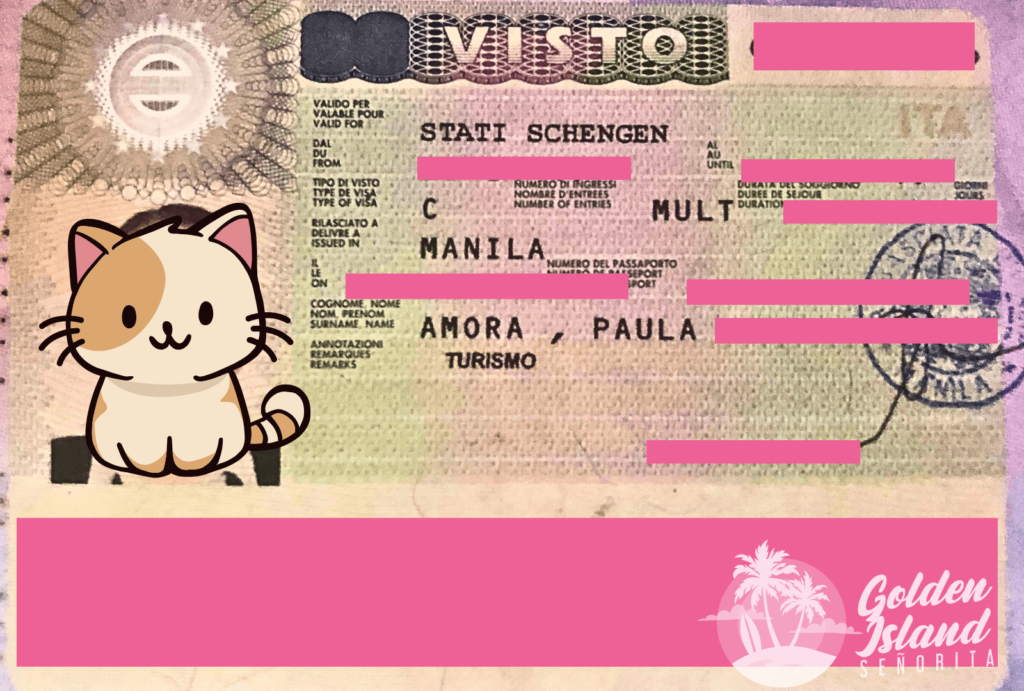
How does an Italian Visa look like?
How long can I stay in the Schengen Area with a visa?
A Schengen Visa typically allows a stay of up to 90 days within a 180-day period. This applies to short-term visas for tourism, business, or family visits.
Where should I apply for a Schengen Visa in the Philippines?
You must apply at the embassy or consulate of the country that is your main destination. If you plan to visit multiple countries equally, apply at the embassy of the country you will enter first.
What are the different types of Schengen Visas?
The main types include:
- Type A: Airport Transit Visa
- Type C: Short-Stay Visa (for tourism, business, etc.)
- Type D: Long-Stay Visa (for studies, work, or residency)
How much is the Schengen Visa application fee in the Philippines?
The standard fee for a Schengen Visa is approximately €80 (around PHP 4,800) for adults and €40 (about PHP 2,400) for children aged 6-12. Fees may vary based on currency conversion and type of visa.
How do I schedule an appointment for a Schengen Visa in the Philippines?
Visit the official website of the embassy or consulate of the Schengen country you’re applying to. Many embassies also partner with Visa Application Centers (like VFS Global) where you can schedule an appointment online.
Can I apply for a Schengen Visa without a prior travel history?
Yes, you can apply without prior travel history, but you must provide strong supporting documents, including financial proof, employment certificates, and a detailed travel itinerary.
How long does it take to process a Schengen Visa in the Philippines?
Processing typically takes 15 calendar days, but it can be longer during peak seasons or if additional documents are required.
Do I need travel insurance for a Schengen Visa?
Yes, travel insurance is mandatory. It must cover at least €30,000 in medical expenses and be valid for all Schengen countries.
How much travel insurance coverage is required for a Schengen Visa?
The required coverage is a minimum of €30,000 (approximately PHP 1.8 million) for medical emergencies and repatriation.
Is it necessary to have confirmed flight tickets for a Schengen Visa application?
No, it’s recommended to submit a flight reservation rather than a fully paid ticket. Many agencies offer verifiable flight reservations for visa applications.
What is the validity period of a Schengen Visa?
The visa is valid for the period indicated on the visa sticker, with a maximum of 90 days within a 180-day period.
How can I prove my financial capability for a Schengen Visa?
Provide bank statements for the past 3 to 6 months, employment certification, and proof of salary or income to show financial stability.
Is a personal appearance required for the Schengen Visa application?
Yes, personal appearance is generally required for biometric data collection (fingerprints and photo).
Do I need an invitation letter for a Schengen Visa?
An invitation letter is required if you are visiting family or friends. For tourism, a detailed itinerary and hotel reservations are sufficient.
Can I apply for a Schengen Visa as a student?
Yes, students must provide proof of enrollment, a no-objection letter from the school, and financial support documents.
What is the minimum bank balance required for a Schengen Visa?
There is no fixed amount, but a general rule is to have at least PHP 50,000 to PHP 100,000 depending on the length of stay and travel expenses.
Where do I address my Bank Statement to?
Italian Embassy in Manila
What should I do if my Schengen Visa application is rejected?
You can appeal the decision or reapply by addressing the reasons for rejection and providing additional documents.
Can I reapply immediately after a visa rejection?
Yes, but it’s recommended to carefully address the reasons for rejection and strengthen your application before reapplying.
What are the common reasons for Schengen Visa rejection?
Common reasons include:
- Incomplete or Incorrect Application: Missing or incorrect information on the application form.
- Insufficient Financial Proof: Failure to demonstrate enough funds to cover travel expenses.
- Lack of Travel Insurance: Inadequate or missing travel insurance meeting Schengen requirements.
- Unclear Travel Purpose: Ambiguous or insufficient explanation of the trip’s purpose.
- Inconsistent Travel History: Unexplained gaps or previous visa violations (e.g., overstaying).
- Weak Ties to Home Country: Insufficient evidence of intent to return after the trip.
- Missing Documents: Missing flight, hotel bookings, or required invitation letters.
- Passport Issues: Expired, damaged, or non-compliant passport.
- Failure to Attend Interview: Not attending a required visa interview or providing inconsistent information.
Can I appeal a Schengen Visa denial in the Philippines?
Yes, the denial letter will include instructions on how to file an appeal. Each Schengen country has its own appeal process.
Is there a fast-track option for obtaining a Schengen Visa?
Some embassies offer expedited processing for an additional fee, but this depends on individual consulates.
Can I apply for a Schengen Visa without a job in the Philippines?
Yes, but you must show proof of financial support, such as a sponsor’s affidavit of support or substantial personal savings.
Are there specific photo requirements for the Schengen Visa application?
Yes, photos must be:
- 35mm x 45mm
- Taken against a white background
- Showing a neutral expression
How early can I apply for a Schengen Visa?
You can apply as early as 6 months before your intended travel date and no later than 15 days before.
Do I need a Schengen Visa for a layover or airport transit?
It depends on your nationality and the country of transit. Filipino passport holders may require an Airport Transit Visa for certain countries.
What is the Multiple Entry Schengen Visa?
A Multiple Entry Visa allows you to enter and exit the Schengen Area multiple times within the visa’s validity period.
Can I extend my stay with a Schengen Visa once I am in Europe?
Extensions are only granted under exceptional circumstances, such as medical emergencies or force majeure.
Final Thoughts
Applying for a Schengen Visa at the Italian Embassy in the Philippines requires careful planning, attention to detail, and timely preparation of documents. By following this guide, Filipino travelers can increase their chances of a successful visa application and enjoy the cultural treasures, culinary delights, and breathtaking landscapes of Italy and beyond.

Polly Amora
Polly Amora is the señorita behind GoldenIslandSenorita.Net. A corporate warrior by day, and a perpetual explorer by heart. She is a lifelong learner who is very outgoing, speaks four languages, loud & outspoken, and loves to have adventures in the mountains, on the beach, and in the city. You can throw her anywhere, and she'll handle it like a pro. Ice cream and bourbon are two of her weaknesses.



One Comment
Schengen Visa
Navigating the visa process can be quite overwhelming, but your step-by-step breakdown makes it much easier for travelers to understand the requirements and prepare their applications properly.
I really appreciated how you covered the necessary documents, from proof of accommodation and travel insurance to financial statements and a detailed itinerary. Many applicants underestimate the importance of having a well-prepared application, and your guide ensures they don’t miss any crucial details that could lead to a delay or rejection.
Your discussion on appointment scheduling and interview preparation was also incredibly useful. Many embassies have limited slots, so planning ahead and being well-prepared for the interview can make all the difference. The tips on dressing appropriately and answering questions confidently were a great addition!
The section on common reasons for visa rejections was particularly insightful. Understanding potential pitfalls allows applicants to avoid mistakes and improve their chances of approval.