
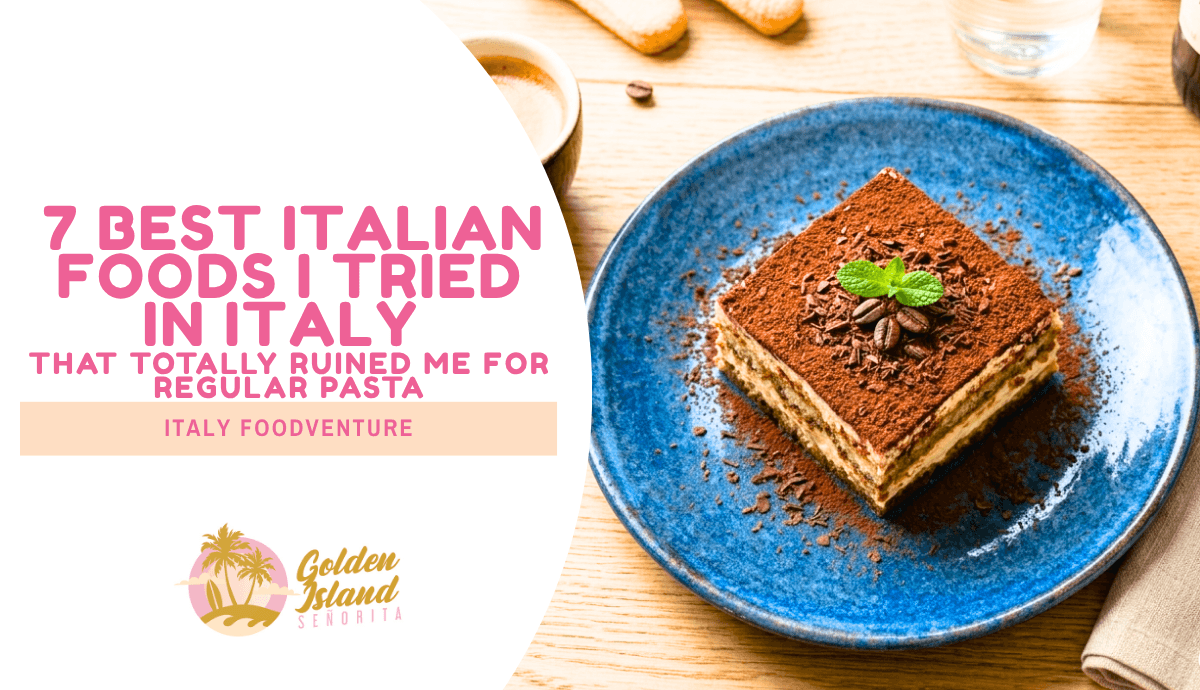
If you go to Italy and only eat pizza and spaghetti, I’m not saying you’re wrong…
…but I am saying you barely scratched the surface, amore.
Because while those two are obviously iconic, Italian foods are so much more than the usual tourist comfort picks. Italy is one of those places where eating is not just part of the trip — it is the trip. The food culture is deep, regional, passionate, and honestly a little intimidating in the best way. Everybody has opinions. Everybody has standards. And after tasting the real thing in Italy, I completely understand why.
Before my trip, I already loved Italian foods. I mean, who doesn’t? Pasta? Yes. Pizza? Obviously. Tiramisu? Emotionally necessary. My greatest love would be Pasta Alla Puttanesca. But once I actually started eating my way through Italy, I realized how wildly diverse and beautiful Italian foods really are. Depending on the region, the ingredients, flavors, and cooking styles can shift dramatically — from buttery and slow-cooked northern classics to bold Roman staples and rustic Tuscan meat dishes that feel like they were made to heal heartbreak.
And let me tell you now: some of these dishes did not just impress me.
They changed me.
These are the kinds of Italian foods that make you stop mid-bite, stare into the distance, and quietly wonder whether your standards have permanently risen. Because they probably have.
So if you’re planning your own Italy trip, building your dream food bucket list, or just trying to learn which Italian foods are actually worth ordering beyond the usual suspects, this list is for you.
These are the best Italian foods I tried in Italy — and yes, I would absolutely fly back for them.
1. Osso Buco alla Milanese
Some Italian foods whisper elegance.
This one arrives like it owns a tailored wool coat and excellent life insurance.
Origin
Osso Buco alla Milanese comes from Milan, in the Lombardy region of northern Italy, where rich and hearty dishes are practically a personality trait. It’s one of the most classic Italian foods from Milanese cuisine and is often associated with comforting, slow-cooked meals and saffron risotto traditions.
What is It?
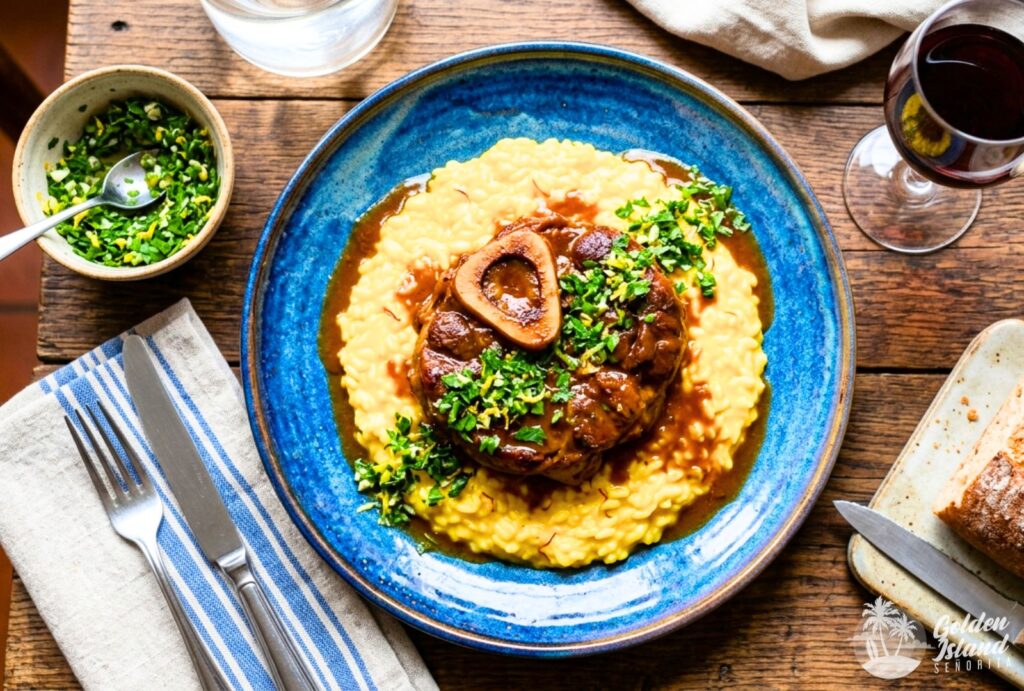
This dish is traditionally made with cross-cut veal shanks slowly braised in white wine, broth, onions, carrots, celery, and tomatoes until the meat becomes beautifully tender and nearly falls apart.
And then, because Italians love to flex without trying too hard, it’s often served with risotto alla Milanese — that iconic golden saffron risotto that makes the entire plate look expensive.
To finish, it’s usually topped with gremolata, a bright mix of parsley, garlic, and lemon zest that cuts through the richness and keeps things balanced.
Why You Should Try It
Because this is one of those Italian foods that feels like luxury comfort food.
It’s rich, deeply savory, and incredibly satisfying without feeling too heavy. The meat becomes so tender it almost feels disrespectful to chew. And if you scoop a little marrow onto your risotto? Congratulations. You’ve officially entered your sophisticated food era.
If you want to go beyond basic pasta and explore richer, more traditional Italian foods, Osso Buco absolutely deserves your full attention.
2. Saltimbocca alla Romana
This dish is tiny, elegant, and low-key lethal in terms of flavor.
Exactly the kind of energy I respect.
Origin
Saltimbocca alla Romana comes from Rome, in the Lazio region, and it’s one of those beloved Roman Italian foods that proves simple ingredients can still hit like emotional damage. The dish’s name roughly translates to “jumps in the mouth,” which sounds dramatic until you eat it and realize… no, actually, that’s fair.
What is it?
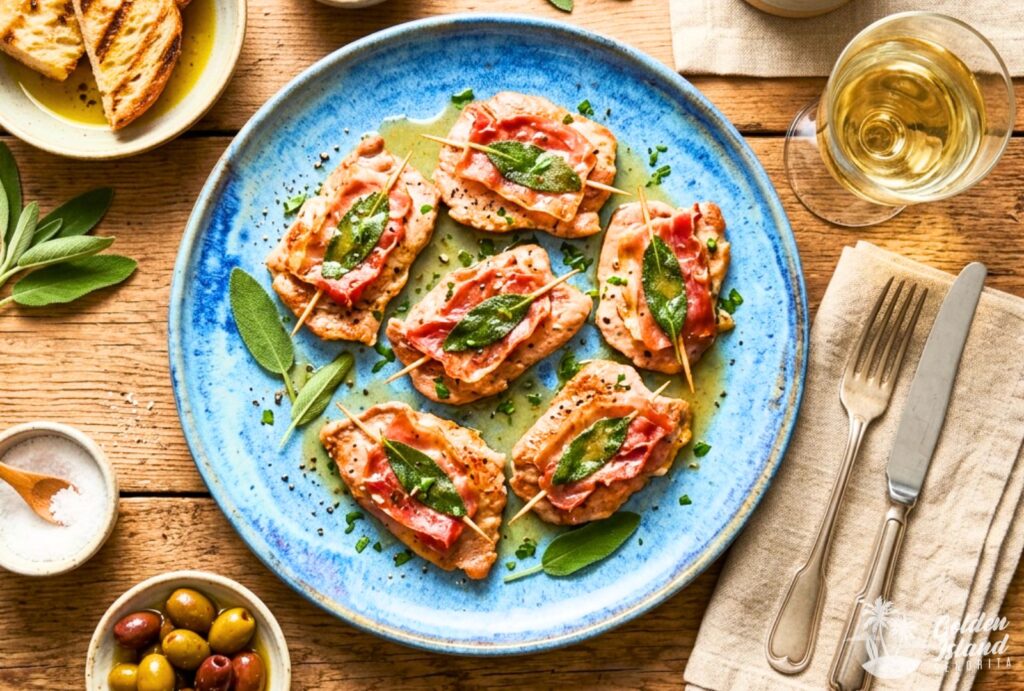
Traditional Saltimbocca is made with thin veal slices, topped with prosciutto and fresh sage, then lightly pan-cooked in butter and white wine.
That’s it.
No overcomplication.
No culinary identity crisis.
No weird foam.
Just excellent flavor.
The veal stays tender, the prosciutto brings saltiness and richness, and the sage adds a fragrant herbal note that ties everything together beautifully.
Why You Should Try It
Because some Italian foods don’t need to be flashy to be unforgettable.
Saltimbocca is one of those dishes that quietly steals the show. It’s savory, aromatic, deeply Roman, and perfect if you want to try authentic Italian foods that feel traditional without being too heavy.
Also, it tastes very expensive.
And that matters.
3. Bistecca alla Fiorentina
This is not steak.
This is a statement.
This is one of those Italian foods that arrives at the table and immediately lets everyone know who the main character is.
Origin
Bistecca alla Fiorentina comes from Florence, in the Tuscany region, and is one of the most iconic Tuscan Italian foods you can try. Traditionally, it’s made using Chianina beef, a prized Tuscan breed known for its quality and rich flavor. Florence takes this dish very seriously — and after trying it, I support the obsession.
What is it?
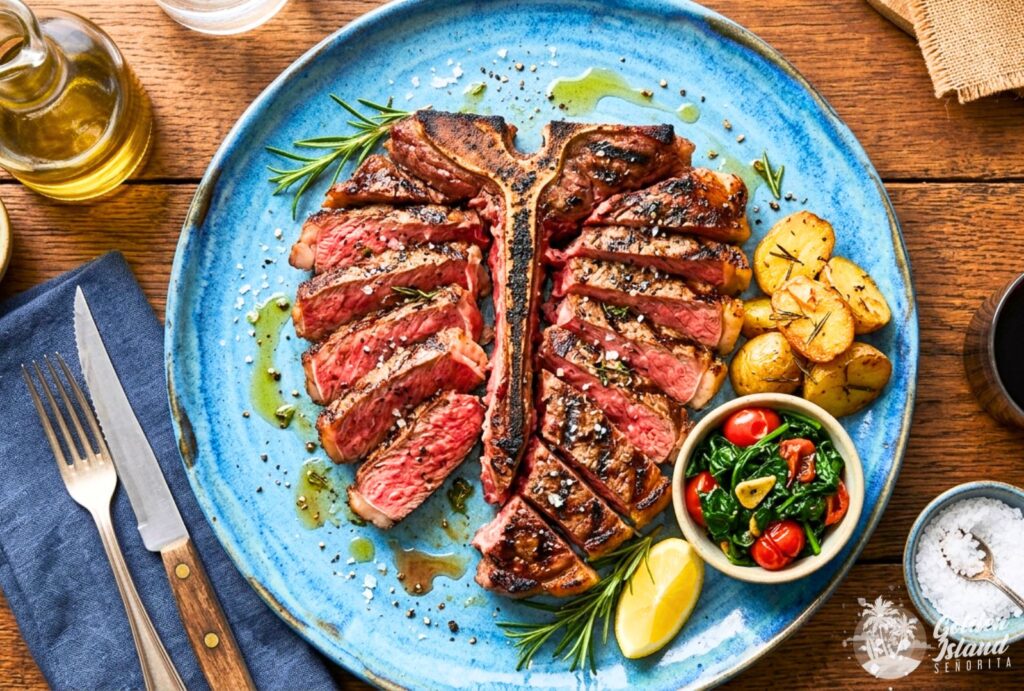
This is a thick-cut T-bone or porterhouse steak, usually grilled over hot coals and seasoned simply with salt, olive oil, and maybe a little pepper.
That’s it.
Because when the meat is excellent, you don’t need to drown it in nonsense.
And yes — it is traditionally served rare.
If you ask for well-done in Florence, I can’t legally confirm what will happen to you socially, but I would not recommend testing the waters.
Why You Should Try It
Because this is one of the boldest, most unforgettable Italian foods you can eat in Tuscany.
It’s smoky, juicy, intensely beefy, and ridiculously satisfying. It’s also one of those dishes that turns a meal into a full event. You don’t just eat Bistecca alla Fiorentina. You commit to it.
If you love meat, or simply want to experience one of the most iconic Italian foods in its proper homeland, this is absolutely non-negotiable.
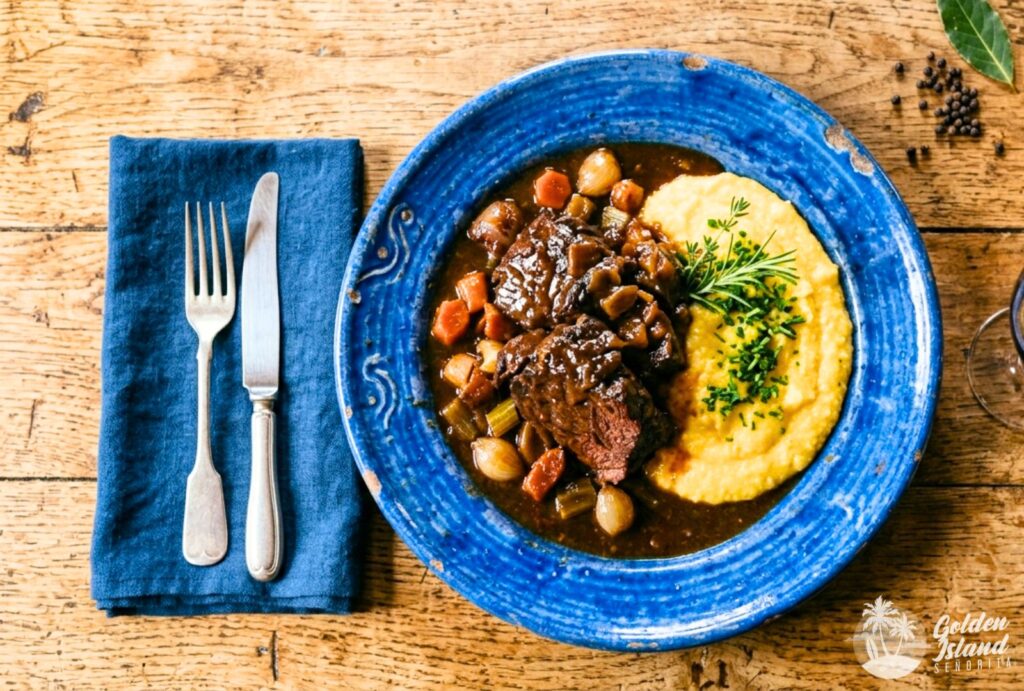
4. Stracotto di Fassona
This dish feels like a soft wool blanket, a rainy afternoon, and somebody’s grandmother silently judging your life choices while feeding you anyway.
In other words: perfection.
Origin
Stracotto di Fassona comes from Piedmont, in northwestern Italy, and is typically made using Fassona beef, a highly regarded breed from the region. Piedmont is known for refined, deeply comforting Italian foods, especially dishes involving slow cooking, wine, and enough flavor to make you briefly emotional over dinner.
What is it?
“Stracotto” means overcooked — but in a glorious, intentional way.
This is a slow-braised beef dish, usually cooked for hours in red wine, stock, herbs, and vegetables until the meat becomes tender enough to practically collapse under your fork.
It’s rich, savory, and usually served with mashed potatoes, polenta, or soft bread to soak up the sauce like the responsible carb vessel it was born to be.
Why You Should Try It
Because this is one of those Italian foods that proves slow-cooked dishes are where true romance lives.
It’s comforting, deeply flavorful, and ideal for anyone who wants to experience regional Italian foods that feel less touristy and more soulful. If you like rich braises, red wine sauces, and meals that make you want to cancel your plans afterward, this is for you.
And frankly, it deserves more international hype than it gets.
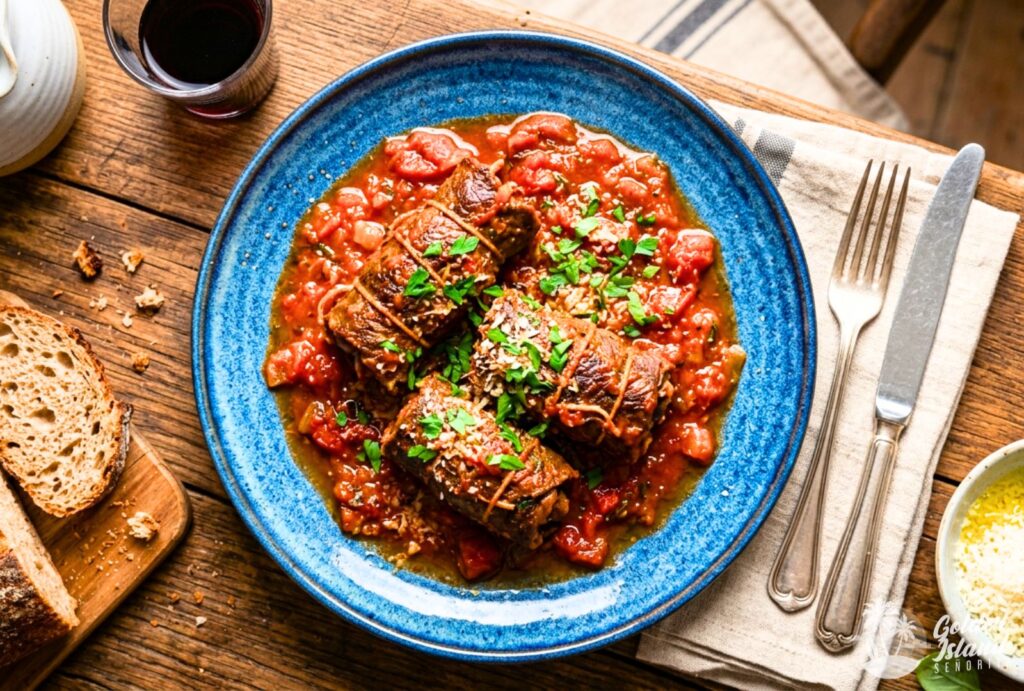
5. Braciole
Braciole is one of those Italian foods that tastes like somebody’s aunt made it for Sunday lunch and would be offended if you only had one serving.
So naturally, I love it.
Origin
Braciole is especially associated with southern Italy, including places like Campania, Puglia, and Sicily, although versions of it exist across Italian households and family tables. This is one of those deeply traditional Italian foods that often varies depending on the family recipe — which means yes, somebody somewhere will insist their nonna’s version is the only valid one.
And honestly? Respect.
What is it?
Braciole typically consists of thin slices of beef rolled around fillings like breadcrumbs, garlic, parsley, cheese, and sometimes cured meats, then tied and simmered slowly in tomato sauce.
So basically:
meat wrapped around more flavor, then drowned lovingly in sauce.
As a concept alone, that’s already a win.
Why You Should Try It
Because Braciole is one of those Italian foods that feels personal.
It’s not trying to be trendy or photogenic. It’s just rich, comforting, hearty, and made with the kind of patience that usually results in very good food and very opinionated grandmothers.
If you want to explore traditional home-style Italian foods that feel warm, soulful, and deeply satisfying, Braciole absolutely belongs on your list.
6. Tiramisu
Ah yes.
The queen.
The icon.
The creamy little menace that has made millions of people (including myself) say, “I’ll just have one bite,” and then lie directly to themselves.
Origin
Tiramisu is widely associated with Treviso, in the Veneto region, although like many famous Italian foods, its exact origin has inspired some debate. What is not debated, however, is the fact that tiramisu is one of the most beloved desserts in Italy — and for very good reason.
What is it?
Traditional tiramisu is made with ladyfingers soaked in coffee, layered with a silky mixture of mascarpone, eggs, and sugar, then dusted with cocoa powder.
Simple. Elegant. Dangerous.
A good tiramisu should be soft but not soggy, rich but not cloying, and balanced beautifully between sweetness and bitter coffee notes.
Why You Should Try It
Because among all dessert Italian foods, tiramisu is that girl.
A proper tiramisu in Italy is so much better than the sad, over-sweet, fridge-abused versions some of us have been subjected to elsewhere. It’s creamy, airy, deeply flavorful, and honestly hard to stop eating once you start.
If you’re a coffee lover, dessert person, or emotionally vulnerable around mascarpone, this one is mandatory.
One good tiramisu in Italy and suddenly your standards become wildly unrealistic forever.
As they should.
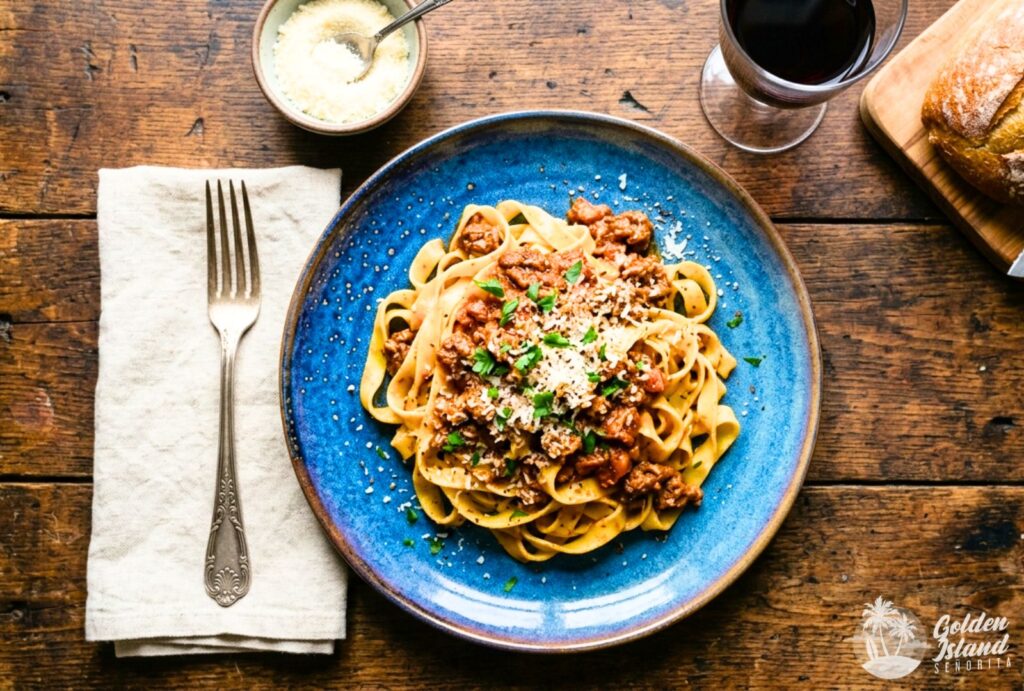
7. Tagliatelle with Ragù
Now let us have a brief but necessary conversation.
If you still think “Bolognese” means random spaghetti with a bright red meat sauce dumped on top, I say this with love:
Italy would like a word.
Origin
Tagliatelle with Ragù comes from Bologna, in the Emilia-Romagna region, one of the greatest culinary powerhouses in the country. This region is basically royalty when it comes to Italian foods, and if Bologna says this is the proper way to eat ragù, then frankly, we listen. Traditional Bolognese food culture pairs ragù with tagliatelle, not spaghetti.
What is it?
Traditional ragù alla Bolognese is a slow-cooked meat sauce made with minced meat, soffritto, wine, milk, and a restrained amount of tomato.
Notice how I said restrained.
Because this is not supposed to be a chaotic swimming pool of tomato sauce. It’s meant to be rich, meaty, silky, and deeply developed in flavor.
And most importantly, it is served with tagliatelle, whose broad ribbons actually hold the sauce properly instead of emotionally letting it slide around like spaghetti often does.
Why You Should Try It
Because this is one of those Italian foods that teaches you what the dish is supposed to be.
It’s comforting, balanced, deeply savory, and one of the most satisfying pasta dishes you can eat in Italy. It’s not flashy. It doesn’t need to be. It already knows it’s elite.
If you want to eat one of the most authentic and beloved pasta-based Italian foods in Italy, this is absolutely essential.
Final Thoughts: Why These Italian Foods Completely Won Me Over
One of the best things about traveling is realizing that the version of something you knew before… was only the trailer.
And that is exactly how I felt about Italian foods.
Before my trip, I already thought I had a solid relationship with Italian foods. I loved the classics, I had favorites, and I genuinely thought I knew what to expect.
Cute.
Italy humbled me beautifully.
Because once you actually eat your way through different cities and regions, you start to understand that Italian foods are not one-note at all. They’re layered, deeply regional, rooted in family traditions, and often built around simple ingredients treated with shocking levels of respect.
That’s the real magic of Italian foods.
They don’t need gimmicks.
They don’t need overcomplication.
They just need good ingredients, proper technique, and a nation full of people who take dinner very personally.
From the rich elegance of Osso Buco alla Milanese, to the bold simplicity of Saltimbocca alla Romana, the giant glorious drama of Bistecca alla Fiorentina, the slow-cooked comfort of Stracotto di Fassona, the soulful warmth of Braciole, the creamy seduction of Tiramisu, and the proper, deeply satisfying beauty of Tagliatelle with Ragù — every single one of these dishes reminded me that some of the best travel memories really do happen at the table.
So if you ever find yourself in Italy, please do yourself a favor:
Eat beyond the clichés.
Yes, have the pizza.
Yes, eat the pasta.
Yes, absolutely say yes to dessert.
But also make room for the dishes that don’t always dominate Instagram or tourist TikTok lists, because some of the best Italian foods are the ones quietly waiting to ruin all your future meals in the most delicious way possible.
And honestly?
That feels like a very respectable reason to book a return trip.
FAQ SECTION
What are the best Italian foods to try in Italy?
Some of the best Italian foods to try in Italy include Osso Buco alla Milanese, Saltimbocca alla Romana, Bistecca alla Fiorentina, Stracotto di Fassona, Braciole, Tiramisu, and Tagliatelle with Ragù. These dishes go far beyond basic pizza and spaghetti and offer a more authentic taste of regional Italian cuisine.
What Italian food should I try besides pizza and pasta?
If you want to explore Italian foods beyond pizza and pasta, try hearty meat dishes like Osso Buco alla Milanese, Saltimbocca alla Romana, and Bistecca alla Fiorentina, plus classics like Braciole and Tiramisu for a more memorable culinary experience.
Is tiramisu better in Italy?
Yes. Painfully yes. A proper tiramisu in Italy is usually fresher, creamier, more balanced, and far less sweet than many versions served elsewhere. It’s one of those Italian foods that hits completely different in its homeland.
What is the most authentic pasta dish to try in Italy?
One of the most authentic pasta dishes to try is Tagliatelle with Ragù in Bologna. It’s one of the most iconic Italian foods in Emilia-Romagna and is traditionally served with tagliatelle — not spaghetti.
Are Italian foods different by region?
Absolutely. One of the best things about Italian foods is how regional they are. Northern Italy tends to feature richer, butter-based, and slow-cooked dishes, while central and southern Italy often highlight olive oil, tomatoes, cured meats, and bold rustic flavors.
Credits & Sources
To make this guide more informative and accurate, I also referenced reputable culinary and cultural sources for the historical background, regional origins, and traditional descriptions of these iconic Italian foods.
Sources Used
- Osso Buco alla Milanese
- Saltimbocca alla Romana
- Bistecca alla Fiorentina
- Tiramisu
- Tagliatelle with Ragù
Additional Note
This article is also based on my personal travel and dining experience in Italy, combined with food culture research to help explain the story behind these dishes in a more useful and traveler-friendly way.
