
The Best French Food I Ever Tried (And Lived to Tell the Tale)
Let me set the scene: I went to France thinking I was “pretty cultured” about French food. I’d seen movies. I’d watched a cooking show once, maybe twice, while folding laundry. I figured a croissant and a shrug of Gallic indifference would get me through customs, security, and at least one dinner party. Reader, I was catastrophically underprepared. It does not care about your confidence, your carb-counting app, or your vague plans to “just have a small bite.” It simply sits there, buttery and smug, waiting for you to fall in love with it against your will, one flaky, saucy, wine-soaked bite at a time.
What followed was two weeks of button-popping, bread-dunking, wine-sniffing chaos, during which I came to understand that this whole culinary tradition isn’t just a cuisine — it’s a full-contact sport, a philosophy, and occasionally a personal attack on my waistline. I laughed, I cried, I definitely bought stretchy pants halfway through week one. Below is my very serious, very expert, slightly drool-stained ranking of the best French food I tried, complete with origins, descriptions, and exactly why you should drop everything, book a flight, and go eat this stuff immediately, preferably with an appetite the size of a small country.
Table of Contents
Steak Frites
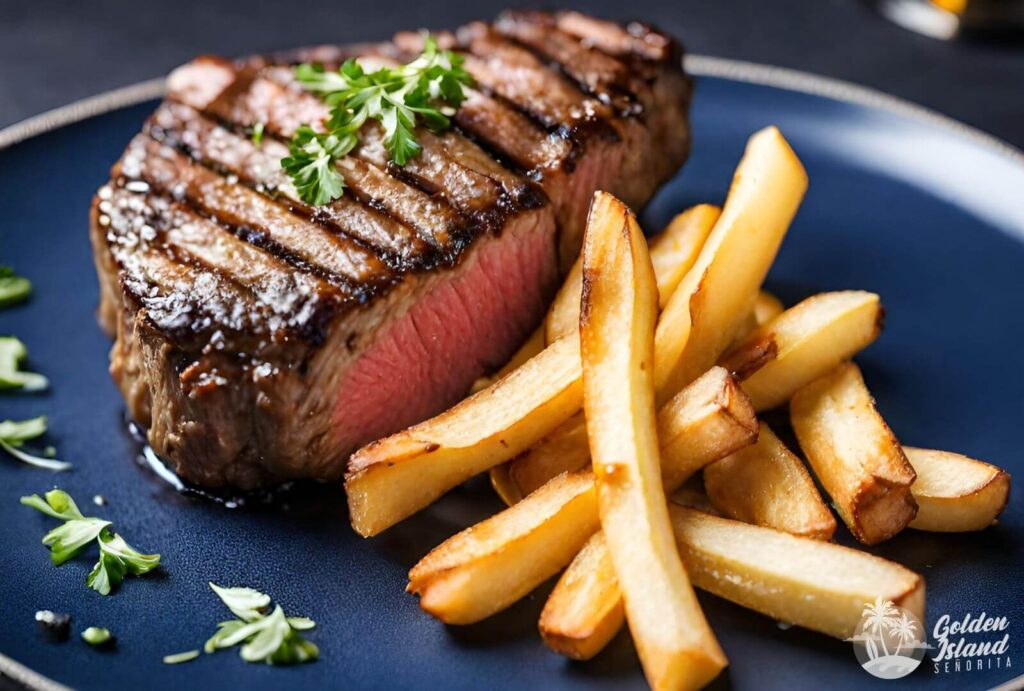
Origin: Steak frites is the culinary equivalent of a mic drop delivered in a Parisian bistro. Nobody can agree on exactly when it was invented, but most food historians point to Belgium and France having a centuries-long, extremely polite argument over who fried the first potato. The French, naturally, refused to lose the argument and simply paired their fries with a perfectly seared steak, turning a side dish into a national identity. By the early 20th century, nearly every bistro in Paris had it chalked up on a blackboard menu somewhere, usually right next to a very judgmental waiter.
What Is It? This is French food at its most unbothered: a hot, juicy steak — usually a cut like entrecôte or bavette — served alongside a towering pile of thin, golden fries, often with a pat of herb butter melting on top like it’s auditioning for a commercial. Some bistros add a peppercorn sauce so glossy it deserves its own spotlight, while others keep things stripped down to salt, fat, and confidence. It’s simple. It’s humble. It’s the culinary version of a black turtleneck: effortless, but somehow still intimidating.
Why You Should Try It? Because sometimes the best French food isn’t the fussiest. It proves that this cuisine doesn’t need seventeen sauces and a blowtorch to be unforgettable — it just needs quality ingredients, a hot pan, and zero pretension. If you want a gateway dish into the world of French food, this is it. Order it medium-rare, order the fries “well done” if you’re weird like me, dip everything in the herb butter when nobody’s watching, and thank yourself later.

Soupe à L’oignon Gratinée
Origin: French onion soup, or soupe à l’oignon gratinée, has roots that stretch back to the Roman era, but the version we know and love today was essentially perfected in 18th-century Parisian markets, where late-night workers needed something warm, cheap, and deeply comforting after hours of hauling produce around Les Halles. It’s the original French food equivalent of a hug from someone who also happens to own a lot of cheese and isn’t afraid to use it.
What Is It? Picture a deep, caramelized onion broth, slow-cooked until the onions practically apologize for ever being raw, topped with a crouton and a blanket of melted Gruyère so thick it requires its own zip code. It arrives bubbling in a crock, daring you to burn the roof of your mouth in the name of French food glory. You will burn it. You will not regret it.
Why You Should Try It? This dish is proof that French food can turn something as unassuming as an onion into an emotional experience. It’s the kind of dish that makes you want to cancel your evening plans, silence your phone, and just sit there, spoon in hand, having a quiet moment of cheese-induced enlightenment. Also, the cheese-pull alone is worth the trip, and possibly worth a small round of applause from strangers at the next table.

Boeuf Bourguignon
Origin: Hailing from the Burgundy region (hence the name), boeuf bourguignon began as peasant food — a clever way to turn tougher, cheaper cuts of beef into something tender and luxurious by slow-braising them in the region’s famous red wine for hours on end. Julia Child later took this rustic dish and introduced it to American kitchens through her cookbooks and television appearances, turning it into one of the most iconic examples of French food on the planet, and possibly the reason an entire generation bought their first Dutch oven.
What Is It? This is beef stew that went to finishing school. Chunks of beef are braised for hours in red Burgundy wine with carrots, onions, mushrooms, and bacon lardons until the meat is fall-apart tender and the sauce is rich enough to make a sommelier weep openly into his napkin. It’s French food that tastes like it took a village, a vineyard, and several patient grandmothers to make, and honestly, it probably did.
Why You Should Try It? Because boeuf bourguignon is basically a warm hug in a bowl, and also because it teaches an important life lesson: given enough time and good wine, even tough things become tender. This is deeply comforting French food, the kind that makes cold, rainy days feel like a cozy plot twist instead of a punishment.
Bouillabaisse
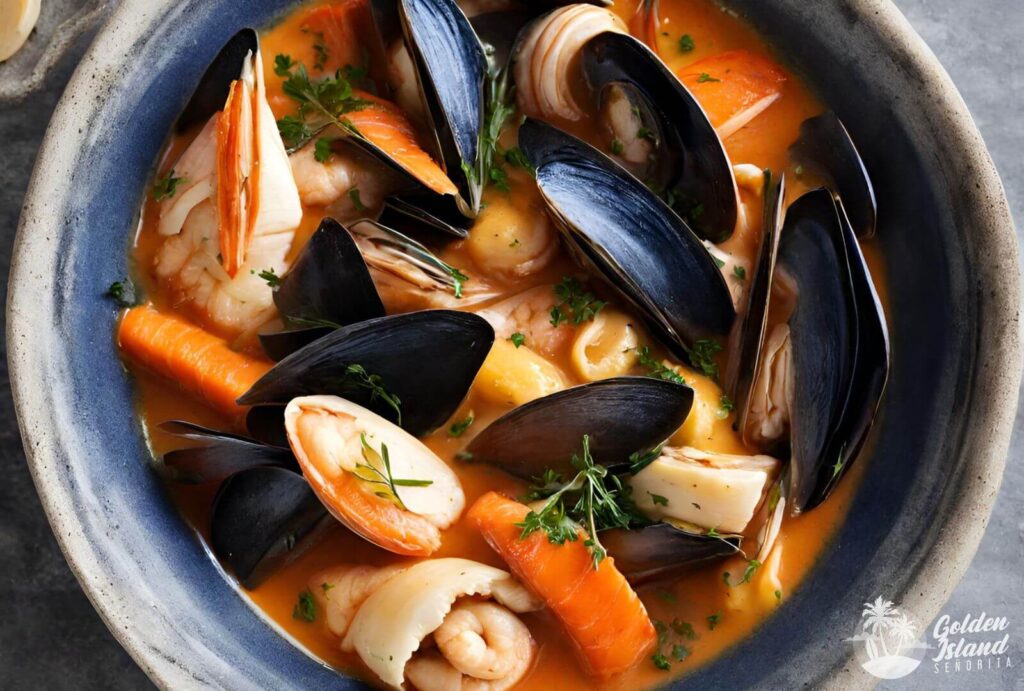
Origin: Bouillabaisse hails from Marseille, where fishermen used to toss the unsellable bits of their catch — the odd-looking rockfish nobody wanted to buy — into a pot with local herbs, saffron, and whatever vegetables were lying around at the end of a long day at sea. What started as a fisherman’s leftovers eventually became one of the most celebrated dishes in French food history, proving once again that the French can turn literally anything, including the stuff nobody else wanted, into a masterpiece.
What Is It? This is a saffron-infused seafood stew loaded with an assortment of fish, mussels, and shellfish, typically served with a garlicky rouille sauce and crusty bread for dunking. Traditionally, the broth is strained and served first as its own course, followed by the fish and shellfish presented separately, turning one bowl of soup into a full theatrical production. It’s fragrant, briny, slightly spicy, and served with the kind of ceremony usually reserved for royal coronations. Truly, this is French food that smells like the Mediterranean decided to throw a party in a bowl.
Why You Should Try It? If you want to understand how French food can be both rustic and elegant at the same time, bouillabaisse is your answer. It’s a dish that rewards patience, curiosity, and a willingness to pick shellfish apart with your bare hands while wearing a bib you insist you don’t need. You will need it. Order the traditional two-course version if the menu offers it — broth first, seafood second — and prepare to question every seafood soup you’ve ever eaten before this one.
Cassoulet
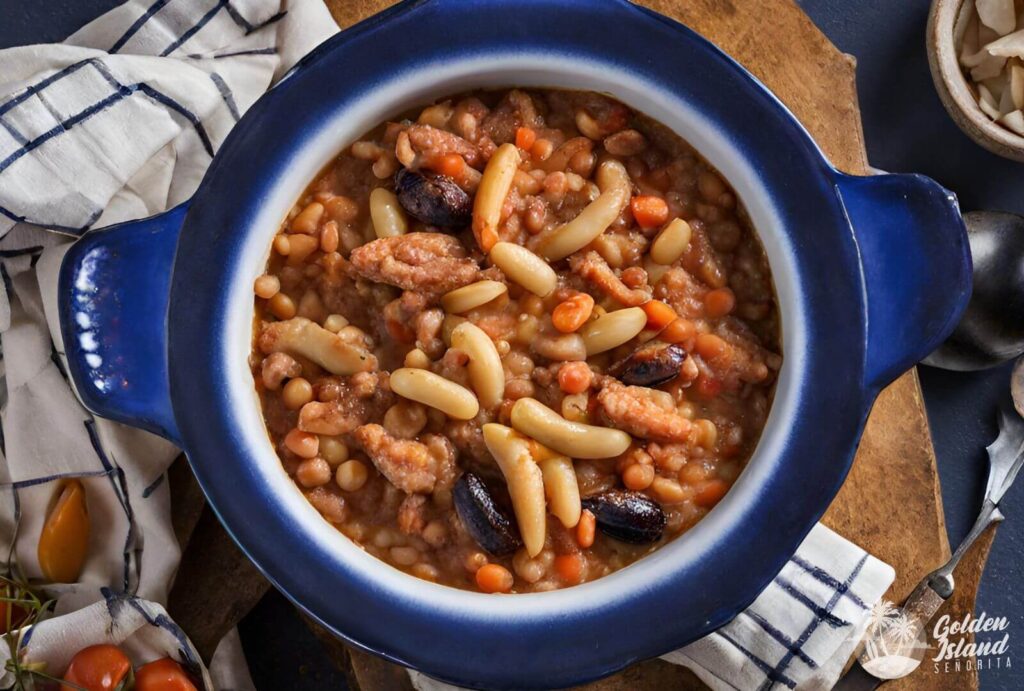
Origin: Cassoulet comes from the Languedoc region in southern France, specifically towns like Toulouse, Castelnaudary, and Carcassonne, all of which will argue passionately (and forever) about who makes the “real” version. Some say it started as a wartime siege dish, cobbled together from whatever ingredients were left in the pantry; others insist it was always meant to be this indulgent. This regional rivalry alone tells you everything you need to know about how seriously the French take their French food.
What Is It? Imagine a slow-cooked casserole of white beans, duck or goose confit, pork, and sausage, all baked together until a golden crust forms on top like edible armor. Tradition says you’re supposed to break that crust and stir it back in up to seven times during cooking, which sounds excessive until you taste the result and understand exactly why someone bothered counting. It’s hearty, rich, and unapologetically filling — the kind of French food that makes you want to nap immediately afterward, ideally under a blanket, ideally in France.
Why You Should Try It? Because cassoulet is the ultimate cold-weather French food, the culinary equivalent of a warm sweater that also happens to contain duck fat and enough protein to fuel a small hiking expedition. It’s rustic, deeply satisfying, and proof that not all elegant cuisine needs to be dainty. Sometimes it just needs to be delicious, slightly too much, and served in a dish you’ll want to lick clean when nobody’s looking.

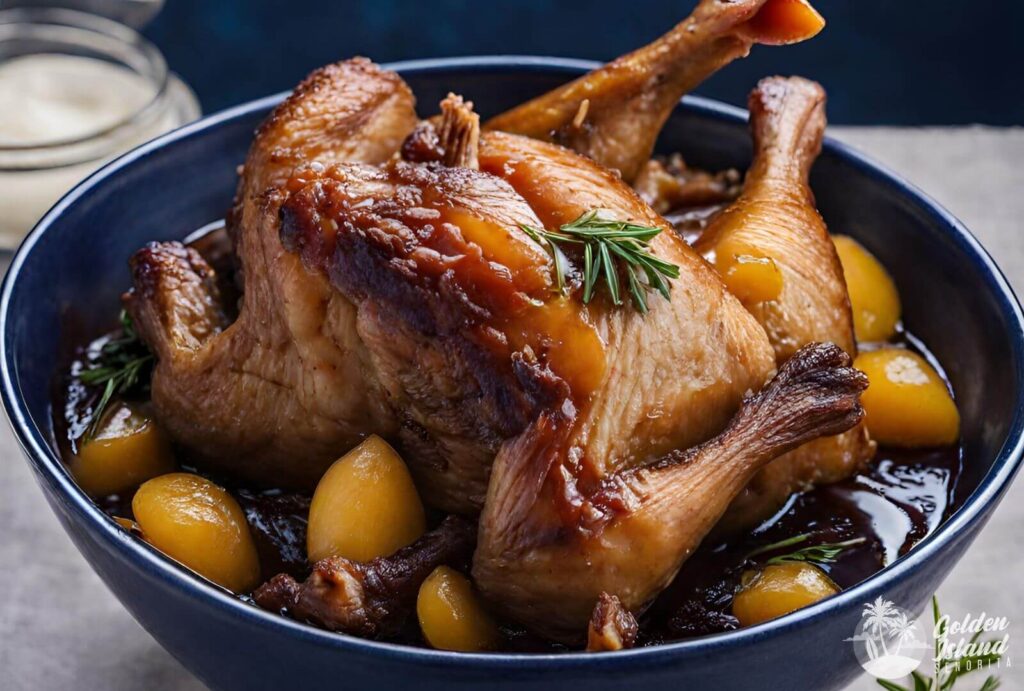
Coq au Vin
Origin: Coq au vin translates to “rooster in wine,” and legend has it the dish was born out of necessity — tough old roosters needed a long wine braise to become edible, and the French, being French, made it iconic instead of just tolerable. Some tales trace it back even further, to Julius Caesar and a defiant Gallic chieftain, though most historians treat that story as a charming legend rather than fact. Its most famous regional variation comes from Burgundy, giving it yet another proud entry in the wine-soaked hall of fame of French food.
What Is It? Chicken is braised low and slow in red wine with mushrooms, pearl onions, and bacon until the meat practically dissolves off the bone and the sauce turns into something you’ll want to drink straight from the pan (no judgment here, we’ve all been there). It’s deeply savory, faintly sweet from the wine reduction, and a masterclass in why French food takes braising so seriously — patience, in this cuisine, is basically a seasoning.
Why You Should Try It? Coq au vin is the dish that convinced me French food could make even chicken feel luxurious. It’s proof that with enough wine and patience, humble ingredients become showstoppers worthy of a standing ovation from your own dinner table. If you’ve ever doubted the power of a good braise, this dish will convert you into a believer, possibly a slightly tipsy one, and definitely one who now owns a Dutch oven.
Confit de Canard
Origin: Duck confit hails from the Gascony region of southwestern France, where preserving duck legs in their own fat was originally a practical way to store meat through long winters before refrigeration existed. Farmers would salt the legs, cook them slowly, then submerge them in fat to seal out air and spoilage. Necessity, once again, gave birth to one of the most decadent entries in the entire French food canon.
What Is It? The duck legs are slow-cooked in their own rendered fat until the meat is unbelievably tender, then often crisped up in a pan before serving, usually alongside potatoes cooked in — you guessed it — more duck fat. It’s rich, savory, slightly crispy on the outside, and meltingly soft on the inside, the kind of dish that makes you forget cholesterol was ever a concept humans invented. This is French food that fully commits to the bit, and the bit is duck fat.
Why You Should Try It? Because confit de canard is a masterclass in texture — crispy skin, tender meat, deep flavor — all from a technique that’s centuries old and originally had nothing to do with indulgence at all. It’s a dish that makes you appreciate how French food can transform humble preservation methods into pure indulgence, turning a survival strategy into a menu highlight. Also, once you’ve had potatoes cooked in duck fat, regular potatoes will feel like a personal betrayal you’re not sure you can forgive.

Salade Niçoise
Origin: As the name suggests, salade niçoise originated in Nice, on the French Riviera, where fresh, sun-soaked ingredients from the Mediterranean coast come together in one plate, likely shaped by the region’s close ties to Italian and broader Mediterranean cooking traditions. It’s the lighter, breezier cousin in the extended family of French food, proving the cuisine isn’t only about butter, cream, and duck fat (though we do love those too, deeply and unashamedly).
What is it? This vibrant salad typically includes tomatoes, hard-boiled eggs, olives, anchovies, green beans, and tuna, all dressed simply in olive oil and vinegar. There are passionate, ongoing debates about whether potatoes or cooked vegetables belong in it at all (purists say no, everyone else says yes and adds them anyway), but at its core, it’s a fresh, colorful showcase of what French food looks like when it takes a beach vacation.
Why You Should Try It? Salade niçoise is the perfect antidote to thinking French food is only rich, heavy, and slow-cooked. It’s proof that this cuisine can also be light, refreshing, and packed with bright Mediterranean flavor, without sacrificing a single ounce of personality. Order it on a sunny afternoon with a glass of rosé and pretend, just for a moment, that you too live on the Riviera and have never once heard of a spreadsheet.
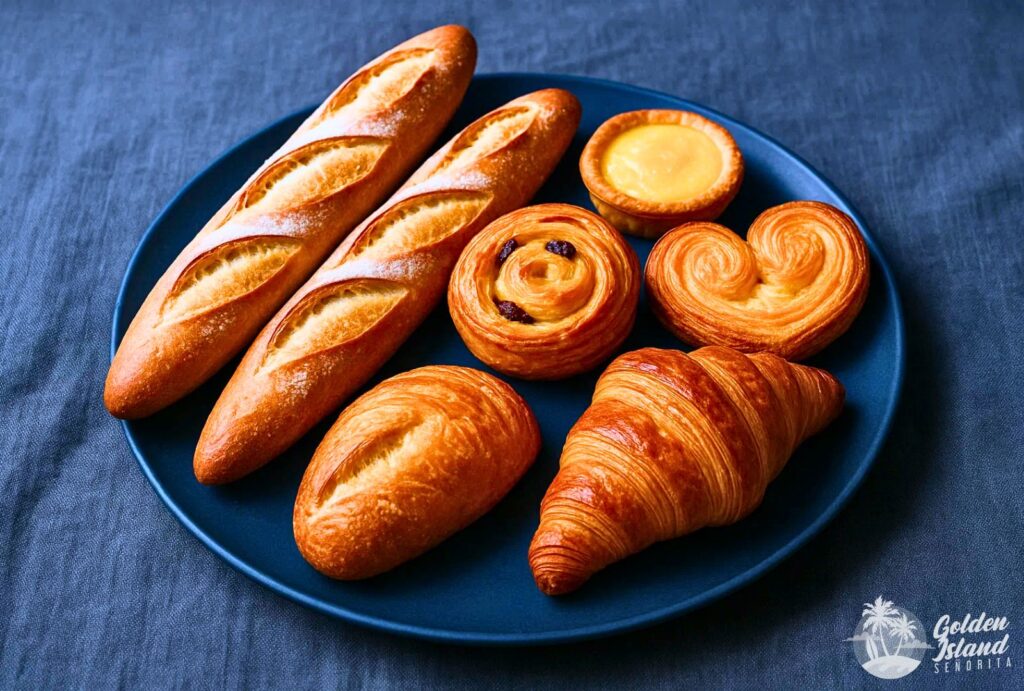
Fresh Baguettes and Other French Pastries
Origin: The baguette became an official symbol of French food culture in the early 20th century, though bread-making in France goes back centuries further, and its distinctive long shape is often credited to laws regulating bakers’ working hours. Meanwhile, pastries like croissants, pain au chocolat, and éclairs evolved through French bakers perfecting laminated doughs and delicate techniques passed down through generations of famously stubborn, famously brilliant pâtissiers who treat a wonky lamination like a personal failure.
What Is It? A proper baguette has a crackly, golden crust that practically announces its own freshness with a satisfying crunch from across the room, giving way to a soft, airy interior riddled with irregular holes, a sign it was made properly and not rushed. Pair that with a warm, flaky croissant or a glossy pain au chocolat, and you’ve got a lineup that represents the beating, buttery heart of French food. This is the stuff mornings were made for, and frankly, the stuff afternoon snacks were made for too.
Why You Should Try It? Because nothing — and I mean nothing — prepares you for how different a fresh baguette tastes compared to whatever sad, plastic-wrapped situation you’ve been calling “bread” your whole life. French bakeries, called boulangeries, treat bread like a sacred craft, complete with early-morning lines of locals who will absolutely judge you for showing up at noon, and one bite will make you understand why French food and good bread are basically synonymous.
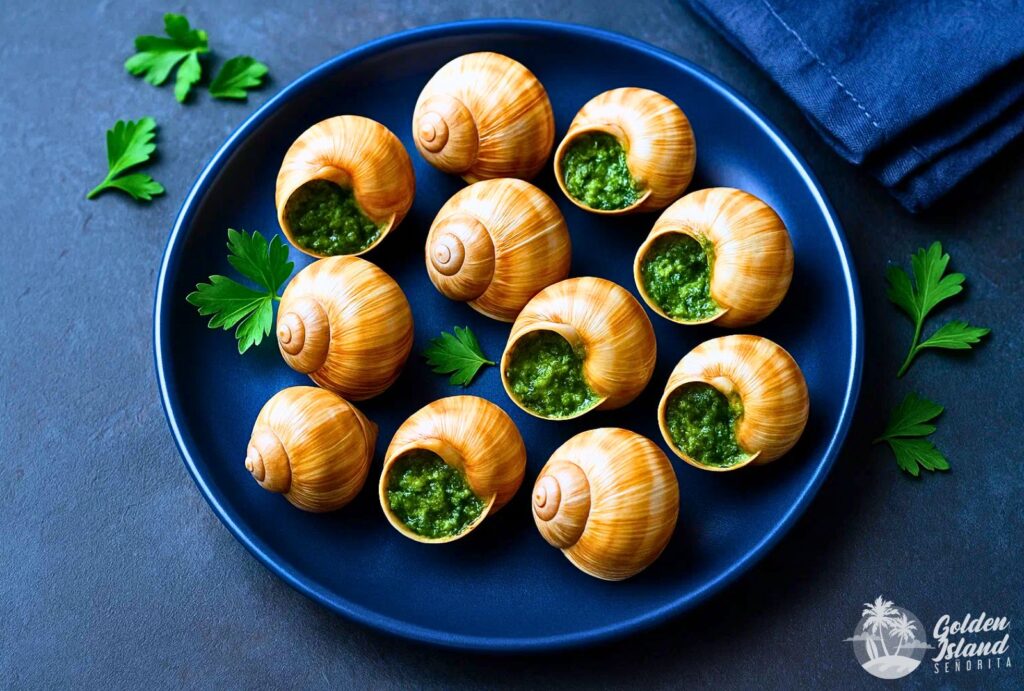
Escargots
Origin: Escargot, or snails prepared as food, dates back to ancient times, with evidence of snail-eating stretching to prehistoric campsites, but the French elevated the humble snail into a refined delicacy, particularly in regions like Burgundy, where escargots de Bourgogne became a signature dish and something of a dinner-party party trick. It remains one of the most talked-about (and joked-about) entries in French food history.
What Is It? Snails are typically baked in their shells with a generous amount of garlic-parsley butter, then served bubbling hot with a small pair of tongs and a tiny fork that make you feel simultaneously fancy and slightly out of your depth, like you’ve been handed surgical instruments for a very small, very buttery operation. The snails themselves are tender, mild, and mostly just a delicious vehicle for garlic butter — which, let’s be honest, is the real star of most French food anyway.
Why You Should Try It? Look, I get it — snails sound intimidating, and the little tongs make you feel like you’re defusing a very small, very delicious bomb. But escargots are the perfect way to prove to yourself (and your skeptical friends back home) that you’re brave enough to explore French food beyond the obvious hits. Once you taste that garlic butter, you’ll stop thinking about what you’re eating and start thinking about how fast you can order seconds, then maybe thirds, then maybe just a spoon for the leftover butter.
Final Thoughts
By the end of my trip, I had eaten my body weight in butter, wine reductions, and things that were once, biologically speaking, snails. And yet I regret nothing. French food has this incredible ability to take humble origins — leftover fish, tough roosters, preserved duck, stale bread — and transform them into dishes people cross oceans for. That’s not just cooking. That’s alchemy with a beret on.
If there’s one thing I learned, it’s that French food rewards curiosity. Order the weird thing on the menu. Dunk the bread in the sauce, even when nobody’s looking (they’re definitely looking, do it anyway). Let the cheese stretch a little too far before you break it, and let the waiter refill your wine glass at least once more than you planned. Because at the end of the day, it isn’t just something you eat — it’s something you experience, loudly, messily, and with your top button undone.
So go. Book the trip, or at the very least book a table at your nearest French bistro, dust off that college French, and practice saying “l’addition, s’il vous plaît” with confidence you absolutely have not earned yet. Bring stretchy pants. Bring an open mind. Bring a healthy respect for butter in all its forms. Your taste buds — and quite possibly your soul — will thank you, right after they forgive you for waiting this long to say oui.

Polly Amora
Polly Amora is the señorita behind GoldenIslandSenorita.Net. A corporate warrior by day, and a perpetual explorer by heart. She is a lifelong learner who is very outgoing, speaks four languages, loud & outspoken, and loves to have adventures in the mountains, on the beach, and in the city. You can throw her anywhere, and she'll handle it like a pro. Ice cream and bourbon are two of her weaknesses.




10 Comments
Chrissy
Wow! Everything sounds so delish 🙂 All other dishes without photos I have to google so I can imagine how it looks like, hahaha then I drool!
Christine H
These dishes sound like something we need to try. We have a local French restaurant we haven’t been to yet. Now I will look at their menu and see if they have any of these.
aisasami
My science teacher in 7th invented his own version of Escargots. He cooked in Shake and Bake chicken mix, it was pretty tasty. I have had Escargots since then but I would try again.
Jenjen Balatico
Oh my! That Steak Frites got me drooling! No doubt I will try them when I got the chance!
Steph
All these meals are delicious. I know I have had steak frites a lot of time but i just didn’t know it was called that. Yummy.