
Applying for a visa often brings a mix of excitement and nerves. Whether you’re planning to work, study, travel, or even start a new life abroad, getting that approval stamp feels like the green light to a dream. But here’s the reality—millions of people around the world apply for visas each year, and unfortunately, many face rejection. Visa rejection reasons can range from minor paperwork mistakes to more complicated concerns about your eligibility or intentions.
I’ve been there myself. When my Schengen Visa was denied back in 2014, it hit hard. I still remember the moment I opened the result—and yes, there were definitely some tears. It was a tough lesson, but one that taught me a lot about how the system works and what really matters in an application.
The good news? Most visa rejection reasons are completely avoidable if you know what to look out for. In this article, I’ll guide you through the most common reasons visas get denied, explain what they mean, and more importantly, show you how to steer clear of them. Because understanding what went wrong is the first step to getting it right the next time.
Why Do Visas Get Rejected?
Before diving into the specifics, it’s important to understand that visa officers must assess whether an applicant meets all legal and procedural requirements. They must also ensure that the applicant’s intentions are genuine and that they pose no risk to the host country.
This leads to many visa rejection reasons rooted in incomplete documentation, inconsistencies, or misrepresentation. The good news? With the right preparation and understanding, most of these can be avoided.
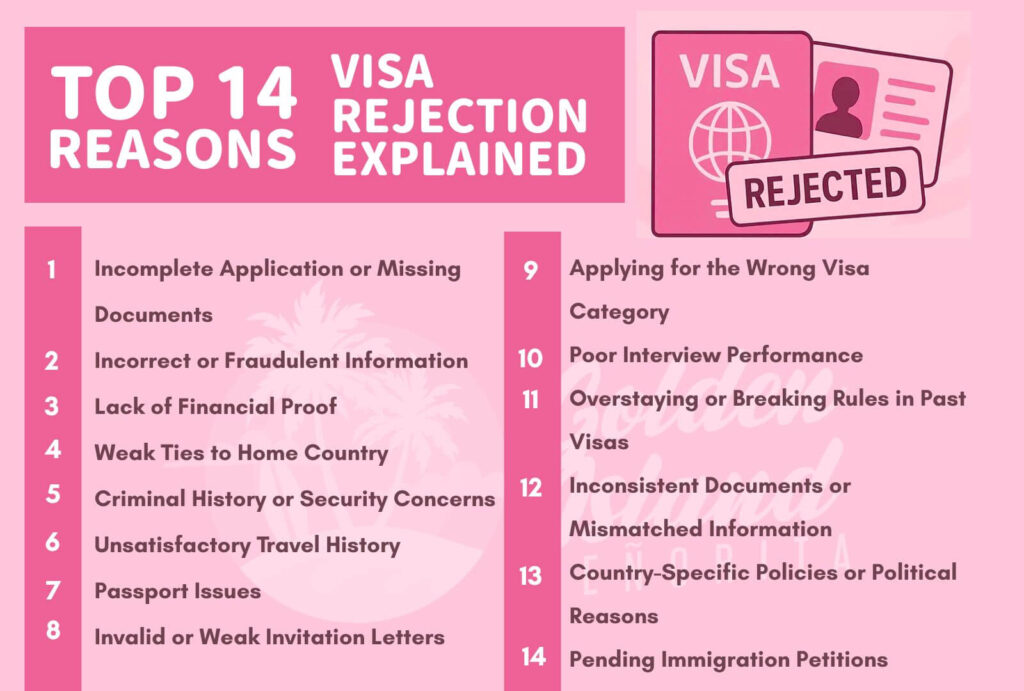
Top 14 Visa Rejection Reasons Explained
Let’s break down the most frequent visa rejection reasons encountered by travelers, students, and professionals worldwide.
1. Incomplete Application or Missing Documents
Why it happens:
Incomplete forms, missing signatures, omitted questions, or absent supporting documents cause confusion or gaps in verifying your application. Visa officers may reject because they cannot verify your eligibility or intent without full paperwork.
How to prevent it:
Before submitting, carefully review every application page and checklist. Confirm all required documents are included, such as valid passports, photographs, completed forms, financial statements, invitation letters, and travel itineraries. Use official embassy checklists and consider getting guidance from visa experts.
Example:
An applicant from India applied for a Schengen visa but forgot to include an employment letter and travel insurance. Their visa was rejected for insufficient proof, citing incomplete documentation.
2. Incorrect or Fraudulent Information
Why it happens:
Providing false data, fake documents, inconsistent answers, or fabricated financials undermines trust. Immigration authorities employ verification tools that quickly detect inconsistencies or fraud, leading to denial and potential bans.
How to prevent it:
Always be truthful and precise with every response and document. If you lack certain documents, explain the situation honestly rather than falsifying. Use official translations and authentic paperwork, and avoid any exaggeration.
Example:
A student lied about being accepted to a university and submitted a forged admission letter. Once discovered, the visa was rejected, and the applicant was blacklisted.
3. Lack of Financial Proof
Why it happens:
Visa officers require assurance that you can sustain yourself financially during your stay without resorting to unauthorized work or public funds. Insufficient or unclear bank balances and unexplained deposits raise concerns.
How to prevent it:
Provide detailed, consistent bank statements covering 3-6 months, pay slips, tax returns, or proof of sponsorship when relevant. Avoid last-minute large deposits. If a sponsor funds your trip, include their financial statements and a sponsorship declaration.
Example:
A tourist visa applicant for Canada failed to show bank statements demonstrating enough funds to cover accommodation and living costs. Their application was rejected for lack of financial proof.
4. Weak Ties to Home Country
Why it happens:
Visa refusals often occur when applicants cannot show strong ties like steady jobs, family responsibilities, property ownership, or educational commitments. Officers fear such applicants might not return and instead overstay or immigrate illegally.
How to prevent it:
Compile evidence of permanent employment contracts, property deeds, ongoing education, close family ties, or business ownership. Including a cover letter explaining personal commitments and intent to return is helpful.
Example:
A young applicant with no job or family ties applied for a U.S. tourist visa, and the consulate rejected due to insufficient ties to their home country.
5. Criminal History or Security Concerns
Why it happens:
Any criminal record or involvement in activities considered security risks—no matter how minor—can cause visa rejection. Countries prioritize the safety of their citizens when granting visas.
How to prevent it:
Be transparent about your history. Some countries require police clearance certificates. If you have past convictions, consult legal professionals and prepare to explain the circumstances honestly.
Example:
A traveler with an unresolved past misdemeanor was denied entry into the UK as their background check raised security concerns.
6. Unsatisfactory Travel History
Why it happens:
Lack of previous international travel or problematic past visas (overstays, denials) invites suspicion about your willingness to comply with visa conditions.
How to prevent it:
Build genuine travel records to visa-friendly countries and avoid visa violations. Provide details of past trips where visas were respected, showing responsible travel behavior.
Example:
A first-time traveler applying for a U.S. visa was rejected because they couldn’t demonstrate a history of traveling abroad, which suggested higher risks of overstaying.
7. Passport Issues
Why it happens:
Passports that are damaged, close to expiration (less than six months validity), or lack sufficient blank pages frequently result in visa rejection.
How to prevent it:
Check passport validity and condition long before applying. Renew your passport if expiry is near. Ensure at least two blank visa pages remain.
Example:
A South African applicant’s passport only had one blank page left, leading to a visa refusal from Germany due to inadequate space for stamping.
8. Invalid or Weak Invitation Letters
Why it happens:
Invitation letters lacking essential details (host’s identity, duration, relationship to applicant), improper format, or no supporting documents make consular officers doubtful about visit authenticity.
How to prevent it:
Ensure invitation letters include full contact details, relationship explanation, payment responsibility, and travel duration. The letters should be formally written and, if possible, notarized.
Example:
An applicant applying to visit family in China submitted a generic invitation without host identity verification; the application was rejected.
9. Applying for the Wrong Visa Category
Why it happens:
Misaligned visa purpose and selected visa type is a frequent and avoidable visa rejection reason. For instance, applying for a tourist visa when the intent is to work or study.
How to prevent it:
Research visa categories and requirements carefully on official embassy websites. Match your true travel intent with the proper visa type and submit all required category-specific documents.
Example:
An applicant applied for a tourist visa to the U.S. but intended to attend a conference for work; the mismatch led to rejection.
10. Poor Interview Performance
Why it happens:
Interviews assess your intent and credibility. Nervousness, inconsistent or evasive answers, or lack of preparation arouses doubts about your reasons for travel.
How to prevent it:
Prepare answers to common questions confidently and truthfully. Practice with friends or consultants; bring all documents and remain calm and clear during the interview.
Example:
A student visa applicant in Australia was rejected after an interview where vague responses failed to convince the officer of genuine study intent.
11. Overstaying or Breaking Rules in Past Visas
Why it happens:
A record of overstaying or violating visa conditions significantly reduces chances of approval. Countries see this as a risk of repeating offenses.
How to prevent it:
Always respect visa conditions and legal stay durations. If you’ve overstayed before, disclose it and explain the situation with supporting documents if possible.
Example:
A previous U.K. visitor visa holder overstayed by 3 months; subsequent visa applications were denied due to this breach.
12. Inconsistent Documents or Mismatched Information
Why it happens:
Conflicting details between your application, interview answers, and documents create red flags. Even minor discrepancies (dates, names, employment status) induce suspicion.
How to prevent it:
Ensure all your documents and statements are consistent. Cross-check names, dates, and facts before submission and interview.
Example:
An applicant gave one employment start date on the application and a different date in the interview, leading to refusal by the Canadian consulate.
13. Country-Specific Policies or Political Reasons
Why it happens:
Political tensions, diplomatic relations, or specific policy changes can influence visa approvals for citizens of certain countries, regardless of application merits.
How to prevent it:
Stay informed of your country’s current diplomatic status with the destination. Apply well in advance and include strong evidence of eligibility.
Example:
Applicants from certain countries faced increased scrutiny and higher rejection rates for U.S. visas in 2025 due to tightened national security policies.
14. Pending Immigration Petitions
Why it happens:
Active immigration petitions (e.g., green card applications) can suggest immigrant intent incompatible with non-immigrant visas, causing denial.
How to prevent it:
Disclose all pending petitions honestly if required. Provide clear explanations and intentions to abide by temporary visa conditions.
Example:
A U.S. tourist visa applicant denied due to a pending employment-based green card petition raised doubts about temporary stay.
Lesser-Known Visa Rejection Reasons That Still Matter
Aside from the big reasons we’ve already covered, here are a few less common—but still relevant—visa rejection reasons:
- Untranslated documents: Submit certified translations where required.
- Suspicious travel patterns: Multiple short-term visa applications in a short time.
- Overly long itineraries: Planning a 6-month “vacation” on a tourist visa could raise suspicion.
These might seem minor, but under close scrutiny, they can become decisive visa rejection reasons.
How to Avoid Common Visa Rejection Reasons
Knowing the most prevalent visa rejection reasons is only the first step. Successfully avoiding them requires a deliberate, well-informed approach.
Preparing a Perfect Application
Countering many visa rejection reasons begins with ensuring your application is error-free. Here’s how to do it:
- Double-check every detail: names, passport numbers, birth dates, and all entries must be consistent with your supporting documents.
- Use checklists offered by consular websites to ensure nothing is missed.
- Ask someone you trust to review your application for common mistakes.
Organizing Documents
Thorough documentation eliminates several visa rejection reasons.
- Gather all required documents: This may include bank statements, letters of employment, property deeds, travel insurance, and invitation letters.
- Ensure your documents are current, in the proper format, and, if needed, officially translated.
- Present documents in a clear, logical order, organized in folders as instructed by the visa office.
Acing the Visa Interview
Avoid interview-related visa rejection reasons through practice and honesty.
- Practice common interview questions.
- Be clear and confident when explaining your travel purpose.
- Consistently align your verbal answers with your written application.
- Stay calm; honesty and straightforwardness work best.
Demonstrating Strong Home Ties
Solid home ties resolve many visa rejection reasons that stem from doubts about your intent to return.
- Provide proof of employment (work letters, contracts).
- Show evidence of property, family, or academic commitments.
- If self-employed, include business licenses or tax returns.
- Cover letters help explain specific ties to your home country.
Ensuring Sufficient Funds
Financial security avoids one of the main visa rejection reasons.
- Submit several months of bank statements (avoid sudden, large, unexplained deposits).
- Include pay slips, tax returns, or proof of business income.
- If a trip is sponsored, provide the sponsor’s financial documents and an official sponsorship letter.
- Consider purchasing travel insurance meeting visa requirements.
Maintaining Transparency and Honesty
Truthful applications are essential for avoiding fraud-related visa rejection reasons.
- Never alter or forge documents.
- Always answer application and interview questions truthfully.
- If there were past visa issues, explain them clearly and provide documentation showing improvements.
Choosing the Correct Visa Type
Avoid this simple but costly visa rejection reason:
- Read consular guidelines to match your travel goal with the right visa category.
- If in doubt, consult the consulate or an immigration professional.
Passport Checks
Passport errors are another straightforward visa rejection reason to prevent.
- Passport should be valid well beyond your intended stay.
- Ensure at least two blank pages for visa stamps.
- Replace damaged passports before applying.
Timely Application
Late or rushed submissions can trigger visa rejection reasons due to missing documents or missed appointments.
- Apply well in advance—some consulates accept applications up to three months before your travel date.
- Book appointments early, especially during peak travel seasons.
Specific Case Studies: Country and Visa Type Nuances
Visa rejection reasons can vary based on where you’re applying and the type of visa sought.
United States
U.S. consulates closely evaluate ties to your home country under section 214(b). The inability to demonstrate intent to return is a core visa rejection reason for tourist and student visas. Misrepresentation and incomplete application forms can also result in denials under sections 212 and 221(g).
Schengen (Europe)
Most Schengen area denials result from incomplete documentation or insufficient proof of funds. Insufficient travel insurance coverage is another frequent cause.
Japan
Japan tends to provide limited feedback about visa rejection reasons, but incomplete, illegible, or inconsistent documents frequently cause denials. Applicants must ensure accuracy and completeness to avoid such problems.
Student Visas Globally
Student visa rejection reasons often involve failing to prove genuine student status, lacking clear post-study plans, or demonstrating insufficient funds. Strong academic records and clear links to home are vital.
Frequently Asked Questions on Visa Rejection Reasons
Here are answers to questions frequently asked by applicants facing visa rejection reasons:
1. Will receiving a visa rejection affect future applications?
Yes. Some countries keep detailed records and repeated or severe visa rejection reasons (like fraud or overstaying) can influence future applications.
2. Can I appeal a visa rejection?
This varies by country and the specific visa rejection reasons. Some consulates allow appeals or re-application—always check official guidelines.
3. Do consulates always specify the reasons for rejection?
Not always. Some, like Japan, rarely specify visa rejection reasons to avoid misuse of the process.
4. How do I prove ties to my home country?
Employment contracts, property deeds, business ownership, and evidence of close family all help counter visa rejection reasons related to weak home ties.
5. Can I reapply after a visa rejection?
Yes, in most cases. But it’s essential to understand the visa rejection reasons from your refusal letter and address them before applying again.
Proactive Strategies to Overcome Past Visa Rejection Reasons
If you’ve faced one or more visa rejection reasons in the past, here’s what to do next:
- Review your previous rejection letter (if given): Some consulates will explain the visa rejection reasons, so you can address them specifically in future applications.
- Consult an expert: Larger visa rejection reasons, such as complex immigration histories, are best handled with expert help.
- Gather more documentation: Strengthen your application beyond the minimum required.
- Be upfront about past rejections: Avoiding the topic or hiding facts may worsen your situation.
- Emphasize improvements: If your circumstances have changed since a previous rejection—such as new employment or family ties—show evidence.
Conclusion: Navigating Around Visa Rejection Reasons
Visa rejection reasons don’t need to be the end of your travel narrative. By understanding and actively sidestepping the most common pitfalls, you greatly increase your chances of turning a no into a yes on your next application.
- Scrutinize every section of your paperwork to avoid administrative or technical visa rejection reasons.
- Approach the interview with preparation and candor; be ready to explain your intent and ties.
- Maintain full transparency and always present your truest self.
Knowledge is your greatest ally when facing visa rejection reasons. If you take the time to fortify your application, seek help when needed, and present yourself honestly, travel and new opportunities will be within your reach.
Bonus Checklist: How to Steer Clear of Top Visa Rejection Reasons
| Visa Rejection Reason | How to Avoid It |
|---|---|
| 1. Incomplete Application or Missing Documents | Carefully fill all application fields; use official checklists; submit every required document such as passport, photos, financial proofs, and invitation letters. Review multiple times before submission. |
| 2. Incorrect or Fraudulent Information | Provide only truthful and verifiable information. Avoid fabricating or altering documents. Seek expert advice if uncertain about documentation. |
| 3. Lack of Financial Proof | Submit consistent bank statements (3-6 months), salary slips, tax returns, or sponsor documents showing adequate funds. Avoid sudden unexplained deposits. |
| 4. Weak Ties to Home Country | Demonstrate strong employment, property ownership, family ties, or education commitments. Include letters from employers or proof of business where applicable. |
| 5. Criminal History or Security Concerns | Be honest about your history. Obtain and submit required police clearances. Consult legal experts if you have a criminal record to prepare explanations. |
| 6. Unsatisfactory Travel History | Build credible travel history to visa-friendly countries. Avoid overstays or visa violations. Provide proof of compliance during previous travels. |
| 7. Passport Issues | Ensure passports have at least six months’ validity beyond intended stay, undamaged condition, and minimum two blank pages for visas/stamps. |
| 8. Invalid or Weak Invitation Letters | Obtain formal, detailed invitation letters stating host identity, relationship, duration, and funding responsibility. Notarize if possible. |
| 9. Applying for the Wrong Visa Category | Research visa types thoroughly on official sites; select the category matching your travel purpose; submit category-specific documents accordingly. |
| 10. Poor Interview Performance | Prepare answers for common questions; be honest, consistent, and confident. Practice interviews to reduce nervousness and demonstrate genuine intent. |
| 11. Overstaying or Breaking Rules in Past Visas | Never overstay or breach visa terms. If prior violations exist, disclose honestly and show rehabilitation or changed circumstances in new applications. |
| 12. Inconsistent Documents or Mismatched Info | Review all documents and application answers for consistency. Ensure dates, names, and facts align perfectly across all materials and interviews. |
| 13. Country-Specific Policies or Political Reasons | Stay updated on political or policy changes affecting your nationality; apply early; strengthen your application with additional proof of eligibility. |
| 14. Pending Immigration Petitions | Disclose any current immigration petitions if required. Clearly explain temporary visit intentions and intent to comply with visa conditions. |
Remember, the road to a successful visa starts with awareness. Make every application count by learning from past visa rejection reasons and forging a clearer path to your global future.
If you’re still unsure or want personalized advice, consider reaching out to a professional immigration consultant. Good luck, and let your next journey be free from visa rejection reasons!
