
Shinkansen Travel Guide: My Exciting Bullet Train Experience from Fukuoka to Osaka
If you’re traveling around Japan and you haven’t ridden the shinkansen yet, let me say this plainly: you’re missing half the adventure. Japan’s famous bullet train isn’t just transportation—it’s an experience in itself. Sleek, fast, efficient, and almost unbelievably punctual, the shinkansen is one of the most impressive train systems in the world.
On my recent trip to Japan, I had the chance to travel from the vibrant city of Fukuoka to the energetic metropolis of Osaka using the shinkansen, and it quickly became one of the highlights of my entire journey. I had heard countless stories about how smooth and fast the shinkansen was, but nothing really prepares you until you actually ride it yourself.
This article is my personal travel guide and review of the shinkansen experience—from booking tickets to arriving in Osaka—with practical tips and everything travelers should know before boarding Japan’s legendary bullet train.
Why the Shinkansen Is Japan’s Most Iconic Way to Travel
When people think of Japan, they usually picture cherry blossoms, sushi, temples, or neon cityscapes. But another symbol of modern Japan is the shinkansen.
The shinkansen is Japan’s high-speed railway network operated mainly by the Japan Railways Group. Since it first launched in 1964, it has become famous worldwide for its speed, safety, and efficiency. These trains can travel up to 320 km/h (about 200 mph), making long-distance travel incredibly fast.
But speed isn’t the only reason the shinkansen is beloved by travelers.
The shinkansen is also known for:
- Exceptional punctuality (delays are often measured in seconds)
- Immaculate cleanliness
- Comfortable seating
- Smooth rides with minimal vibration
- Easy access to major cities across Japan
For travelers like me, taking the Japanese bullet train is not just about reaching a destination—it’s about experiencing one of the most advanced railway systems in the world.
My Route: From Fukuoka to Osaka
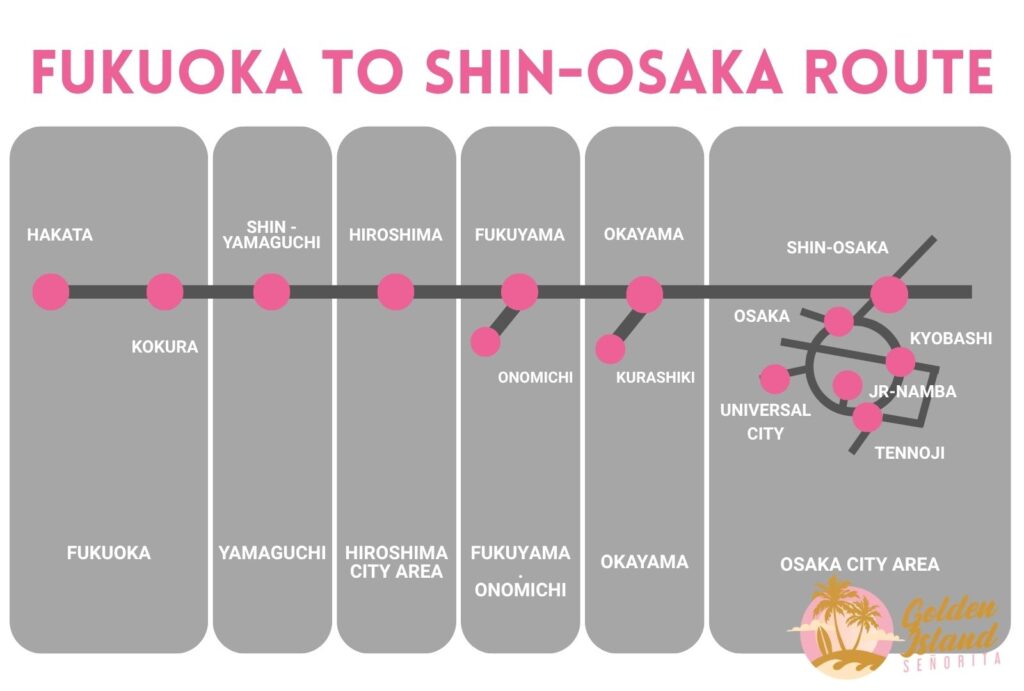
My journey began in the lively city of Fukuoka, located on Japan’s Kyushu island.
Fukuoka is known for its relaxed vibe, waterfront scenery, and delicious street food culture. But it’s also an excellent transportation hub, thanks to its direct connection to the shinkansen network.
To start my trip, I headed to Hakata Station, which is Fukuoka’s main railway station and the gateway to the shinkansen in Kyushu.
From Hakata Station, I boarded the shinkansen bound for Shin-Osaka Station, the primary high-speed rail station serving Osaka.
The distance between Fukuoka and Osaka is roughly 600 kilometers, but the shinkansen makes the trip feel incredibly quick.
Travel time on the shinkansen:
- Approximately 2.5 hours
Considering the distance, that’s impressively fast.
Booking My Shinkansen Ticket
One of the things I appreciated most about traveling in Japan was how easy it was to book a shinkansen ticket. For a transportation system that moves millions of passengers every year at lightning speed, the booking process is surprisingly straightforward—even for first-time visitors.
Before my trip from Fukuoka to Osaka, I explored several options for securing my shinkansen seat. Japan offers multiple ways to book depending on your preference, budget, and travel style. Some travelers like doing everything digitally, while others prefer speaking with staff directly at the station.
Here are the four most common ways to book a ticket that travelers should know.
1. Ticket Machines
One of the fastest ways to buy a ticket is through the automated ticket machines located inside major train stations.
Stations like Hakata Station and Shin-Osaka Station have rows of bright green machines dedicated to ticket purchases.
What’s great is that many of these machines have English-language options, making them very easy to use even if you don’t speak Japanese.
Here’s how the process usually works:
- Select the English language option.
- Choose your route and travel date.
- Select whether you want a reserved or non-reserved seat.
- Choose your train departure time.
- Pay using cash or card.
- Receive your shinkansen ticket instantly.
The whole process usually takes just a few minutes.
This method is perfect for travelers who are comfortable navigating simple menus and want their shinkansen tickets quickly without waiting in line.
Pro tip: Some machines allow you to choose a seat by window or aisle when booking your ticket.
2. JR Ticket Counters
For travelers who prefer human assistance, the JR ticket counters are another reliable way to book a shinkansen seat.
These counters are operated by Japan Railways Group, the company responsible for the shinkansen network.
The counters are often called “Midori no Madoguchi,” which literally means “Green Window.”
At stations like Hakata Station, you’ll find these counters staffed by trained employees who can help you choose the best shinkansen option for your trip.
This method is especially helpful if:
- You’re unfamiliar with Japanese train systems
- You have multiple destinations
- You want seat recommendations
- You’re traveling with large luggage
The staff can print your tickets, explain the train schedule, and ensure everything is booked correctly.
Yes, you may need to wait in line during peak hours—but the peace of mind can be worth it.
3. Japan Rail Pass
Many international travelers rely on the Japan Rail Pass, which allows unlimited rides on most JR-operated trains, including many shinkansen lines.
The Japan Rail Pass can be an incredible value if you plan to travel between multiple cities in Japan.
With the pass, you can board many bullet trains without buying separate tickets each time. Instead, you simply reserve seats at a station or ride in non-reserved cars depending on the train type.
However, travelers should know a few things:
- Some of the fastest shinkansen trains (like Nozomi) are not included in the standard pass.
- Seat reservations are still recommended during busy travel periods.
- The pass must be purchased before entering Japan (in most cases).
For travelers planning routes like Tokyo–Kyoto–Osaka–Fukuoka, the Japan Rail Pass often pays for itself quickly.
4. Klook (Online Booking)
Another increasingly popular way to book tickets is through travel platforms like Klook.
Klook allows travelers to reserve shinkansen tickets online before even arriving in Japan. This can be extremely convenient for people who prefer planning everything in advance.
Through Klook, you can:
- Book tickets in English
- Compare travel times
- Secure reserved seats
- Avoid long lines at stations
Once you arrive in Japan, you simply redeem your tickets at designated JR counters or machines.
This method is particularly useful for first-time travelers who want everything arranged before their trip.
Which Booking Method Is Best?
All four methods work well, but the best option depends on your travel style.
Here’s a quick comparison travelers might find helpful:
Ticket Machines
Fast, easy, and great for spontaneous train travel.
JR Ticket Counters
Ideal for first-time visitors who want help planning their shinkansen route.
Japan Rail Pass
Best for travelers visiting multiple cities using the shinkansen network.
Klook
Perfect for those who prefer booking their tickets online before arriving in Japan.
Reserved seats are slightly more expensive than non-reserved seats, but I highly recommend them—especially during busy travel seasons.
Understanding Your Shinkansen Ticket Before Boarding
If it’s your first time riding the shinkansen, the ticket can look a little confusing at first. There are several numbers, Japanese characters, and abbreviations printed on it, and many travelers aren’t sure which details actually matter.
The good news is that once you understand the key sections, reading a shinkansen ticket becomes very easy. Using my own ticket from Hakata Station to Shin-Osaka Station, here’s a simple breakdown of what each part means.
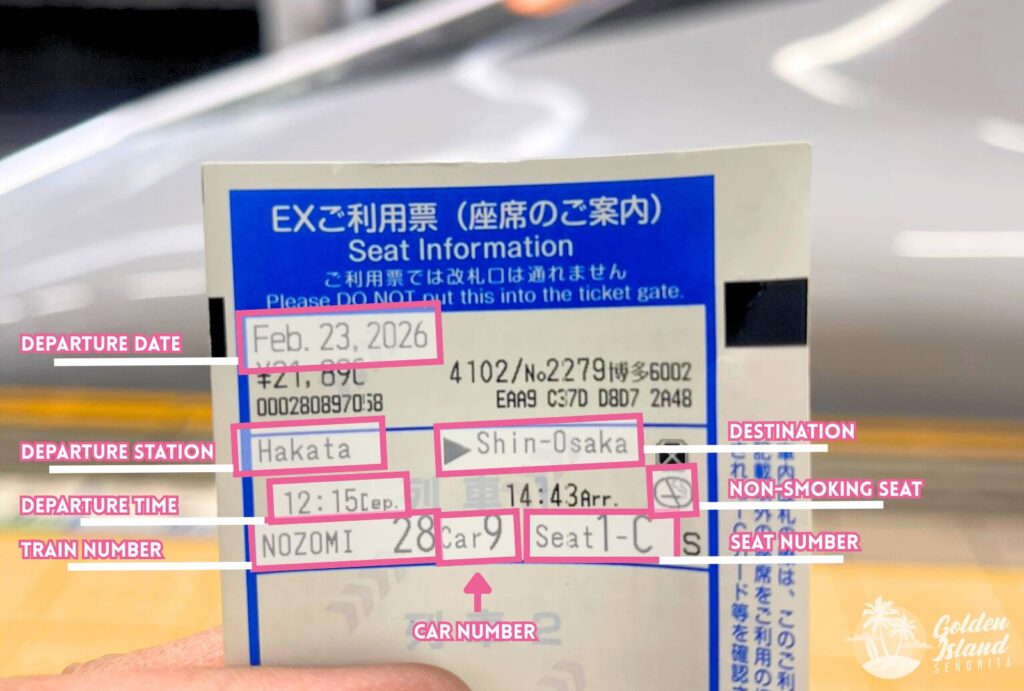
Departure Date
At the top of the ticket, you’ll see the departure date.
In my case, the ticket shows:
Feb. 23, 2026
This tells you the exact day your shinkansen reservation is valid. Unlike regular train tickets in some countries, tickets are usually tied to a specific date and train, so make sure this matches your travel plan.
Departure Station
The ticket also shows where your shinkansen journey begins.
For my trip, the departure station printed on the ticket is:
Hakata
This refers to Hakata Station, which is the main shinkansen station serving the city of Fukuoka.
When you arrive at the station, simply follow the signs pointing toward the shinkansen gates.
Destination
Next, you’ll see the station where your shinkansen journey ends.
My ticket shows:
Shin-Osaka
This refers to Shin-Osaka Station, the primary shinkansen terminal for Osaka.
Always double-check this section before boarding to make sure you’re on the correct train route.
Departure Time
Your shinkansen ticket also includes the exact departure time.
My ticket shows:
12:15 Dep.
This means my shinkansen leaves Hakata Station at 12:15 PM sharp. Japan’s high-speed trains are famously punctual, so it’s important to arrive at the platform early.
I usually recommend being at the platform 15–20 minutes before departure.
Arrival Time
Next to the departure time, you’ll see the arrival time.
My ticket indicates:
14:43 Arr.
This means the shinkansen will arrive at Shin-Osaka Station at 2:43 PM.
This information helps travelers plan connecting trains, subways, or hotel check-ins.
Train Name and Train Number
Another important detail on your shinkansen ticket is the train name and number.
Mine says:
NOZOMI 28
The Shinkansen system has several types of trains depending on speed and stops. The Nozomi trains are the fastest on the route between Fukuoka and Osaka.
The number 28 identifies the specific train service you are boarding.
This matters because several shinkansen trains may depart within minutes of each other.
Car Number
Every shinkansen train has multiple cars, similar to airplane cabins.
My ticket shows:
Car 9
When you arrive at the platform, you’ll see floor markings that show where Car 9 will stop. Simply line up there before boarding.
This is one reason boarding a shinkansen feels so organized—everyone already knows where their door will be.
Seat Number
Your ticket also shows your exact seat.
Mine says:
Seat 1-C
This tells you exactly where you’ll sit inside the shinkansen.
Seats are usually labeled like airplanes:
- A and E = window seats
- C = aisle seat
- B and D = middle seats
Once you enter your train car, just follow the seat numbers above the rows.
Non-Smoking Seat
Modern shinkansen trains are mostly non-smoking, but older tickets still indicate this clearly.
My ticket shows a non-smoking symbol, meaning the seat is located in a non-smoking car.
This is standard for most shinkansen services today.
Why Understanding Your Ticket Matters
Learning how to read your shinkansen ticket makes navigating Japan’s train system much easier. With just a quick glance, you can confirm:
- Your train number
- Your departure time
- Your train car
- Your seat number
- Your destination
Once you understand these details, riding the shinkansen becomes incredibly straightforward.
And honestly, holding that ticket in your hand just adds to the excitement—you know you’re about to board one of the fastest and most efficient trains in the world.
Shinkansen Platform Signs Guide (How Not to Board the Wrong Train)
Let me be honest—Japan’s train system is incredibly efficient, but the first time you step onto a shinkansen platform, it can feel like information overload. Screens, symbols, numbers, arrows everywhere… and somehow everything is moving fast and calmly at the same time.
The good news? Once you understand how to read the shinkansen platform signs, navigating becomes ridiculously easy.
Here’s my personal, no-stress guide to decoding shinkansen platform signs like a pro.
1. Start with the Departure Boards
When you arrive at the shinkansen platform in Hakata Station, the first thing you should look for is the large digital departure board.
These screens show:
- Train name (e.g., Nozomi, Hikari, Sakura)
- Train number
- Departure time
- Platform number
- Destination
For example, you might see:
NOZOMI 28 → Shin-Osaka | 12:15 | Platform 14
This tells you exactly which shinkansen to board.
Pro tip: Always match the train number, not just the destination. Multiple shinkansen trains may be heading to the same city.
2. Confirm the Platform Number
Your ticket and the departure board will both show your platform number.
At Hakata Station, platforms are clearly labeled, and signs will guide you directly to the correct shinkansen track.
Once you reach the platform, double-check the signs again. Japan doesn’t leave room for guesswork—but you still want to be sure.
3. Look for Overhead Electronic Signs
On the platform itself, there are overhead electronic displays above each boarding area.
These signs usually show:
- Train name and number
- Destination (e.g., Shin-Osaka Station)
- Departure time
- Car numbers
These are your final confirmation that you’re in the right place for your shinkansen.
If the sign matches your ticket—you’re good to go.
4. Follow the Floor Markings (This Is Genius)
This is honestly one of my favorite things about the shinkansen system.
On the platform floor, you’ll see clear markings showing:
- Car numbers (Car 1, Car 2, Car 3, etc.)
- Boarding lines
- Door positions
So if your ticket says Car 9, you just walk to the section marked “9” on the floor and wait there.
When the shinkansen arrives, the door will stop exactly in front of you.
No guessing. No chaos. No running like you’re chasing a flight.
5. Pay Attention to Train Types
Not all shinkansen trains are the same.
You’ll see names like:
- Nozomi (fastest, fewer stops)
- Hikari (slightly slower)
- Kodama (stops at every station)
Platform signs clearly display the train type, so make sure it matches your ticket.
Boarding the wrong type of shinkansen won’t ruin your life—but it will mess up your timing.
6. Listen to Announcements (They Actually Help)
Announcements on the shinkansen platform are made in multiple languages, including English.
They usually include:
- Train arrival
- Boarding instructions
- Platform confirmations
If you’re unsure, just pause and listen. Japan’s train announcements are clear and actually useful—not just background noise.
7. Ask Staff If You’re Unsure
If you’re standing there staring at signs like they’re a math problem, don’t worry—it happens.
There are always staff members on the shinkansen platform ready to help. When I asked for assistance, they immediately checked my ticket and pointed me to the correct boarding spot.
They’re used to helping travelers, so don’t hesitate.
8. Watch the Incoming Train Display
As your shinkansen approaches, platform screens will update to show:
- “Arriving” status
- Train number
- Car alignment
This is your final confirmation before boarding.
And yes—the train will stop exactly where the signs say it will.
Because… Japan.
At first glance, shinkansen platform signs might look overwhelming—but they’re actually designed to make your journey as smooth as possible.
Once you understand:
- Departure boards
- Platform numbers
- Overhead signs
- Floor markings
…you’ll navigate the shinkansen system like you’ve been doing it for years.
And honestly? After one ride, you’ll probably start wondering why every country can’t be this organized.
Arriving at Hakata Station
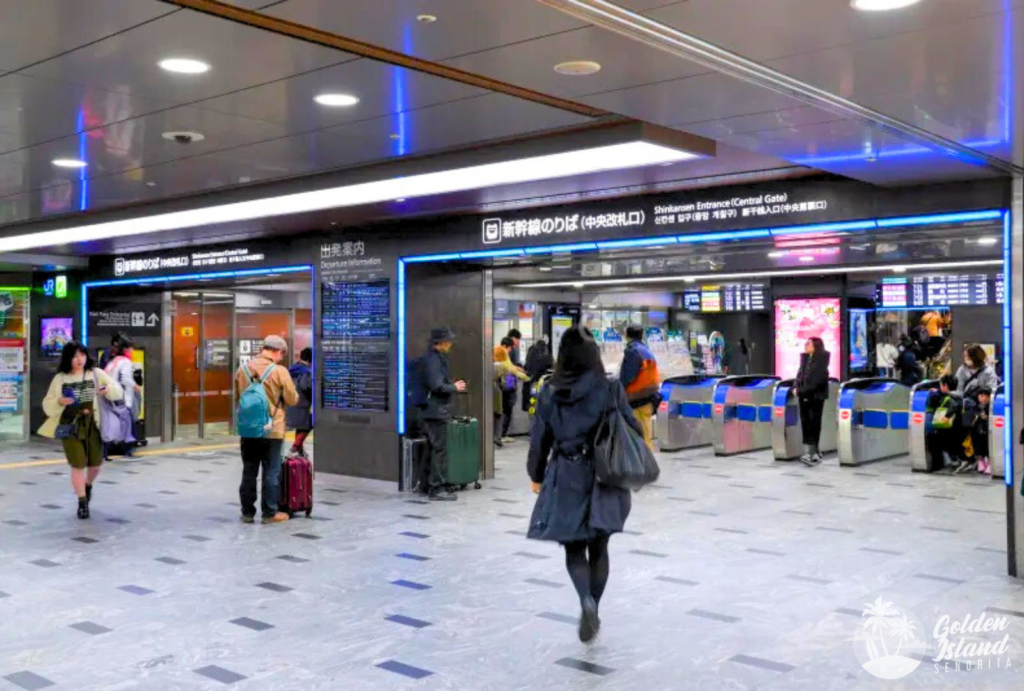
Walking into Hakata Station for the first time felt a bit like stepping into a transportation universe of its own. The place is absolutely massive.
Hakata Station isn’t just a train station—it’s practically a small city. Inside, you’ll find an impressive mix of shopping centers, restaurants, convenience stores, bakeries, and even rooftop spaces where travelers can relax. It’s the kind of station where you could easily spend an hour exploring before your train even departs.
But what impressed me most was how incredibly organized everything was for shinkansen passengers.
Pro Tips for Arriving at Hakata Station
Arriving at Hakata Station for your shinkansen journey can feel a little overwhelming at first because the station is huge and very busy. But with a few practical tips, navigating this major transportation hub becomes much easier.
Here are some helpful pro tips based on my own experience.
Arrive at least 20–30 minutes before your shinkansen departure.
The shinkansen is famously punctual, and boarding happens very quickly. Giving yourself extra time ensures you can find the correct platform, locate your train car, and settle in before boarding begins.
Follow the “Shinkansen” signs — they’re everywhere.
Even though Hakata Station is massive, the station signage is excellent. Clear directions pointing toward the shinkansen gates are posted throughout the station in both Japanese and English, making it much easier for international travelers to navigate.
Head to the platform waiting area early.
After scanning your shinkansen ticket at the gate, you’ll typically be directed to the upper platform level where trains depart. Seating can be limited, so it’s a good idea to arrive early if you want a place to sit while waiting for your shinkansen.
Grab anything you need before boarding.
Once you’re inside the shinkansen platform area, your food and shopping options become more limited. Luckily, Hakata Station has plenty of convenience stores, cafés, and restaurants where you can grab drinks or snacks before your train leaves.
Look for the car number markers on the platform floor.
Each shinkansen train stops at very specific spots on the platform. Floor markings show exactly where each train car will stop, so check your ticket and line up at the correct number before boarding begins.
Don’t hesitate to ask the station staff for help.
If you ever feel unsure about where to go, there are plenty of friendly staff members throughout the station. The information counters and platform attendants at Hakata Station are incredibly helpful and are used to assisting international travelers.
Listen for multilingual announcements.
Train arrivals and departures for the shinkansen are announced in several languages, including English. These announcements can help confirm you’re waiting for the correct train.

Address: 1-1 Hakataekichuogai, Hakata-ku, Fukuoka-shi, Fukuoka 812-0012, Japan
Exit: Chikushi Exit (closer to Shinkansen gates) and Hakata Exit (main entrance).
First Glimpse of the Shinkansen
Standing on the platform at Hakata Station, waiting for my train, I finally caught my first glimpse of the shinkansen arriving.
And honestly? It looked even cooler in real life.
The train glided into the station almost silently, with its long aerodynamic nose and sleek white body cutting through the platform like something straight out of a sci-fi movie. From a distance, it honestly looked more like a spacecraft than a train.
Despite traveling at incredibly high speeds between cities, the train approached the platform with remarkable smoothness and precision. It slowed down gracefully and stopped exactly at the designated boarding marks painted on the platform floor.
Watching it arrive was a moment that made me realize just how advanced Japan’s railway system really is.
The boarding process was equally impressive.
Passengers were already lined up neatly on the platform according to their assigned car numbers, following the floor markings that indicate exactly where each door will stop. When the train doors opened, people boarded calmly and efficiently, without any rushing or confusion.
Everything moved quickly, yet it never felt chaotic.
Another thing that stood out to me was how attentive and helpful the station staff were. Friendly attendants were present on the platform, assisting passengers and answering questions. At one point, I even asked one of them to confirm my train just to make sure I wasn’t boarding the wrong shinkansen—and they kindly checked and reassured me that I was in the right place.
It might sound like a small thing, but when you’re in a foreign country navigating a massive train network, that kind of assistance makes a huge difference.
Between the futuristic design of the train, the calm and organized boarding process, and the helpful staff making sure everyone was headed in the right direction, my first encounter with the shinkansen already felt like a perfectly choreographed travel experience.
And the journey hadn’t even started yet.
Inside the Shinkansen
The moment I stepped inside the shinkansen, I understood why travelers rave about it.
The train interior was incredibly clean and spacious.
Seats were arranged in a 2+3 configuration, similar to airplane seating but with noticeably more legroom.
Each seat on the shinkansen included:
- Reclining function
- Fold-down tray table
- Power outlets (on many trains)
- Comfortable headrests
- Generous leg space
The seats also rotated, which is something unique to the shinkansen. Train staff can turn the seats around so groups can face each other.
It immediately felt far more comfortable than many airline cabins.
The Smoothest Ride I’ve Ever Experienced
Once the shinkansen departed Hakata Station, the acceleration was surprisingly smooth.
Within minutes, the train was already traveling at incredible speeds—but it barely felt like it.
What amazed me most about the shinkansen ride was how stable everything remained.
There was almost no shaking, rattling, or turbulence.
You could easily:
- Work on a laptop
- Read a book
- Walk around the train
The ride felt effortless.
Japan’s engineering behind the shinkansen is clearly designed for maximum passenger comfort.
Watching Japan Fly Past the Window
One of my favorite parts of the shinkansen journey was simply watching the scenery.
As the shinkansen sped through Japan, the views constantly changed.
I saw:
- Quiet countryside villages
- Rolling green mountains
- Rice fields stretching to the horizon
- Small towns passing in seconds
- Urban skylines appearing suddenly
Because the shinkansen travels so quickly, the scenery sometimes feels like watching a moving postcard.
Yet the ride remained smooth enough to enjoy the view comfortably.
Cleanliness and Efficiency on the Shinkansen
Another thing that stood out was how spotless the shinkansen was.
Japanese trains already have a reputation for cleanliness, but the shinkansen takes it to another level.
The restrooms were clean and modern, and the aisles were tidy throughout the entire ride.
Before the shinkansen departs each terminal station, a dedicated cleaning crew performs what is famously called the “7-minute miracle,” where the entire train is cleaned in just minutes.
It’s one of the reasons the shinkansen remains so consistently pristine.
Comfort for Long-Distance Travel
Even though the journey from Fukuoka to Osaka took around two and a half hours, it didn’t feel long at all.
The shinkansen seats were supportive and comfortable enough that I could easily relax during the ride.
There was plenty of space to stretch my legs, and overhead racks allowed passengers to store luggage conveniently.
Unlike airports where you deal with long security lines and boarding delays, traveling by shinkansen felt refreshingly simple.
You just arrive at the station, board the train, sit down, and enjoy the ride.
Arriving at Shin-Osaka Station
Before I knew it, the shinkansen was already approaching Osaka. The journey from Fukuoka felt surprisingly quick, and the smooth ride made the time pass faster than expected.
As we got closer to the city, announcements were made in both Japanese and English informing passengers that we were arriving at Shin-Osaka Station, the main shinkansen hub serving the Osaka region.
Like everything else about the shinkansen experience, the arrival process was calm, orderly, and efficient. Once the train stopped, passengers disembarked smoothly and followed the clearly marked paths toward the station exits, connecting rail lines, and subway systems.
Shin-Osaka Station is a major transportation gateway, so from here it’s very easy to reach central Osaka neighborhoods using local trains and subways.
Some of the most popular areas you can easily access from Shin-Osaka Station include:
- Namba
- Dotonbori
- Umeda
This is one of the biggest advantages of traveling by shinkansen—you arrive right in the middle of the city instead of dealing with distant airports and long transfers. It makes intercity travel across Japan incredibly convenient.
Pro Tips for Arriving at Shin-Osaka Station
So if your hotel is near Dotonbori like mine was, taking the subway from Shin-Osaka to Nippombashi is a simple and reliable way to reach your destination after your shinkansen journey.
Shin-Osaka Station is crowded by default.
As the main shinkansen hub in the region, Shin-Osaka Station is almost always busy. Large numbers of travelers pass through here every day, including commuters, tourists, and passengers transferring from the shinkansen to local trains. Expect crowds most of the time, especially near ticket gates, escalators, and subway transfer areas. Just move with the flow and follow the signs—you’ll get through smoothly.
There are no convenient bus stations near Shin-Osaka for central Osaka destinations.
My accommodation was near Dotonbori, and I originally planned to take a bus from Shin-Osaka Station. However, after asking the station staff, I was informed that there are no bus terminals nearby that go directly to the Dotonbori area. Instead, the easiest option was the subway. I ended up taking two subway lines going toward Nippombashi Station, which is within walking distance of Dotonbori.
Follow the signs for the Osaka Metro immediately after exiting the shinkansen gates.
Once you exit the shinkansen area, you’ll see clear signs pointing to the subway connections. Look specifically for the Osaka Metro signs. The subway network connects Shin-Osaka to most major districts in the city.
Expect one or two transfers if you’re heading to popular tourist areas.
Districts like Namba, Dotonbori, and Umeda are not directly connected by one single line from Shin-Osaka. Don’t worry though—transfers are very common and stations are clearly marked in English.
Use Google Maps or a train navigation app.
Japan’s transit apps are incredibly accurate. Apps like Google Maps can show you the exact platform, transfer stations, travel time, and fare for your route from Shin-Osaka to wherever you’re staying.
Get a physical subway map.
Even though navigation apps are helpful, I highly recommend picking up a physical subway map at the station. You can usually get one for free at the information counter in Shin-Osaka Station.
I’ve been to Osaka several times and I still get confused with the subway system occasionally. Having a map in your hands makes it much easier to visualize the different lines and plan your route, especially when transferring between stations.
Travel Tips for First-Time Shinkansen Riders
If you’re planning your first shinkansen journey, a little preparation can make the experience even smoother. While Japan’s railway system is famously efficient, large stations and multiple train options can feel overwhelming at first—especially if it’s your first time riding the shinkansen.
Based on my own trip from Fukuoka to Osaka, here are some practical tips that helped make my shinkansen ride easy and stress-free.
1. Arrive Early
Even though boarding the shinkansen is incredibly efficient, arriving about 20 to 30 minutes early is a good idea. Major stations like Hakata Station can be quite large, and giving yourself extra time allows you to find the correct platform without feeling rushed.
Arriving early also gives you a chance to locate your car number, check departure boards, and settle into the waiting area before the shinkansen arrives.
2. Check Car Numbers
Every shinkansen platform has clear floor markings showing exactly where each train car will stop. These markers correspond to the car numbers printed on your ticket.
Once you locate your car number, simply line up at the correct spot on the platform. When the shinkansen arrives, the doors will stop right in front of the designated boarding mark, making the process very organized and efficient.
3. Reserve Seats During Busy Seasons
During holidays, weekends, and peak travel periods, shinkansen trains can fill up quickly. If you’re traveling during busy times, reserving your seat in advance is highly recommended.
A reserved seat guarantees that you’ll have a comfortable spot on the shinkansen, which is especially helpful for longer journeys like the ride between Fukuoka and Osaka.
4. Bring Entertainment
The shinkansen ride is incredibly smooth and relaxing, making it a perfect time to unwind during your journey. Many travelers bring a book, watch movies on their phone, or simply enjoy the changing scenery outside the window.
Because the shinkansen ride is so stable, it’s easy to read, work on a laptop, or even take a quick nap while traveling between cities.
5. Keep Your Ticket Handy
One important thing to remember when to keep your ticket with you throughout the trip.
You’ll need to insert your ticket when exiting the station at your destination. For example, when arriving at Shin-Osaka Station, the gate will collect your ticket when you leave the shinkansen area.
Why the Shinkansen Is Better Than Flying (For This Route)
Travelers often ask whether flying or taking the shinkansen is better.
For the Fukuoka to Osaka route, the shinkansen is often the smarter choice.
Here’s why:
Total travel time
- Airport travel requires early arrival and security checks.
- The shinkansen departs directly from city centers.
Comfort
- The shinkansen offers more legroom and freedom to move around.
Convenience
- Stations are centrally located.
In many cases, the shinkansen ends up being faster door-to-door than flying.
Final Verdict: Is the Shinkansen Worth It?
Absolutely.
My trip from Fukuoka to Osaka proved why the shinkansen is considered one of the best rail systems on the planet.
The experience was:
- Fast
- Comfortable
- Efficient
- Stress-free
- Scenic
The shinkansen combines advanced technology with incredible service, making travel across Japan feel effortless.
For travelers exploring Japan, riding the shinkansen isn’t just transportation—it’s a must-have experience.
If you’re planning a trip between major cities like Fukuoka and Osaka, I highly recommend taking the shinkansen at least once.
It’s fast, fascinating, and surprisingly relaxing.
And who knows—you might find yourself enjoying the ride so much that the journey becomes just as memorable as the destination.

Polly Amora
Polly Amora is the señorita behind GoldenIslandSenorita.Net. A corporate warrior by day, and a perpetual explorer by heart. She is a lifelong learner who is very outgoing, speaks four languages, loud & outspoken, and loves to have adventures in the mountains, on the beach, and in the city. You can throw her anywhere, and she'll handle it like a pro. Ice cream and bourbon are two of her weaknesses.


You May Also Like
OSAKA E-PASS: Value, Convenience, and Top Attractions (With 1 or 2 Days Itinerary for First-Time Visitors)
How to Book Your Shinkansen Ticket Using Klook: Easy Step-by-Step Guide for First-Timers