
Your Ultimate Hong Kong Travel Guide 2026: Everything You NEED to Know Before You Go!
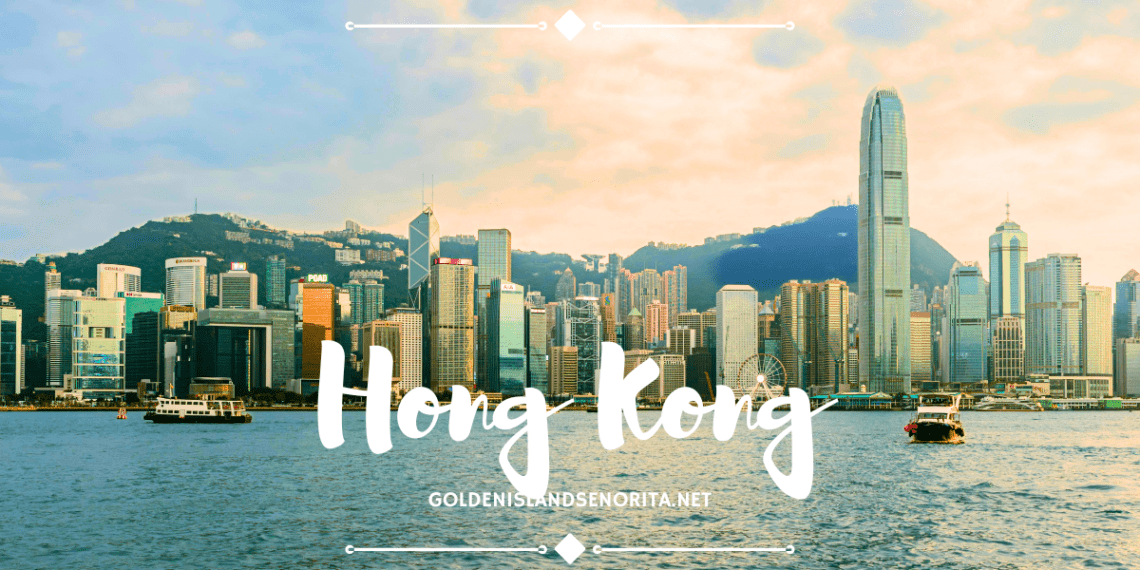
I still remember the first time I flew into Hong Kong at night. The approach over the harbour — that wall of neon-lit skyscrapers stacked against dark mountains, with fishing junks dotting the water below — felt like arriving inside a science-fiction film. Hong Kong does that to you. It grabs you before you even land.
Few cities on earth pack so much into so little space. You can eat a flawless bowl of wonton noodles for under three dollars at a cha chaan teng (Hong Kong-style diner), then have a Michelin-starred dinner that evening without changing neighborhoods. You can ride the world’s longest outdoor escalator in the morning and hike to a deserted beach in the afternoon. Colonial street signs sit above traditional Chinese medicine shops. Double-decker trams rattle past glass towers. The contradictions are the point — and once you understand the rhythm of the place, Hong Kong becomes one of the most addictive cities in Asia.
This guide is everything I wish someone had handed me before my first trip: practical, honest, and packed with the details that actually matter on the ground.

Travel Essentials for Visitors
Visa Policy
Here’s the good news: Hong Kong operates an extraordinarily generous visa-free regime that is entirely separate from mainland China’s visa policy. As a Special Administrative Region (SAR), it controls its own immigration rules, and most nationalities can enter without a visa at all.
Citizens of over 160 countries and territories — including the United States, United Kingdom, all EU member states, Australia, Canada, Japan, South Korea, and most Southeast Asian nations — receive visa-free entry on arrival. Depending on your passport, you’ll typically get either 14, 30, 90, or 180 days. British National (Overseas) passport holders get 180 days; most Western passports receive 90 days.
Entry is via the Hong Kong Immigration Department, and the stamp in your passport is your permission to stay. You don’t need to fill in any arrival cards anymore — the process was digitised. Just make sure your passport is valid for at least one month beyond your intended departure date, and that you have proof of onward travel if asked.
| ⚠️ IMPORTANT: |
|---|
| Your Hong Kong visa exemption does NOT give you access to mainland China. If you plan to cross the border into Shenzhen or elsewhere on the mainland, you’ll need a separate Chinese visa arranged in advance. |
Travel Insurance
Hong Kong’s public hospitals are excellent and heavily subsidized for residents, but as a visitor, you are not entitled to that subsidy. A single night in a public hospital as a non-resident can cost HK$5,000–$6,000 (roughly US$640–$770), and private hospitals are significantly more expensive. Travel insurance is not legally required to enter Hong Kong, but I’d treat it as non-negotiable.
Look for a policy that covers emergency medical treatment and hospitalisation, medical evacuation (particularly relevant if you’re exploring the country parks and hiking trails), trip cancellation, and personal belongings. Hong Kong is an extremely safe city with very low crime, so theft coverage matters less here than in many destinations — but medical coverage is essential.
If you’re a credit card holder, check whether your card provides complimentary travel insurance when you pay for flights with it. Many premium cards do, though limits and conditions vary considerably.
Geography
Location
Hong Kong sits on the southeastern tip of China, on the eastern side of the Pearl River estuary, bordering Guangdong Province to the north. It lies at approximately 22°N latitude — roughly the same as Havana, Cuba — which tells you a lot about the climate you can expect.
The territory covers about 1,114 square kilometres and is made up of three main areas: Hong Kong Island (the original British settlement, home to Central, Wan Chai, and Causeway Bay), Kowloon Peninsula (the dense urban area across Victoria Harbour, including Mong Kok and Tsim Sha Tsui), and the New Territories (the vast hinterland stretching to the mainland border, including the outlying islands). Most tourists spend their time on the Island and in Kowloon, but the New Territories and islands like Lantau, Lamma, and Cheung Chau are absolutely worth a day trip.
- Region: South China, Pearl River Delta
- Total Area: 1,114 km² (430 sq mi)
- Highest Point: Tai Mo Shan, 957 m
- Harbour: Victoria Harbour
Weather
There are effectively four seasons in Hong Kong, and choosing when you visit makes a massive difference to your experience. I’d argue October to early December is the sweet spot: clear skies, low humidity, daytime temperatures in the mid-20s Celsius (mid-70s Fahrenheit), and cool evenings. This is when the city is at its most photogenic and most pleasant to explore on foot.
| Season | Months | Conditions | Verdict |
|---|---|---|---|
| Cool & Dry | Oct – Dec | 22–27°C, low humidity | Best time to visit |
| Cold & Dry | Jan – Feb | 12–18°C, occasional cold snaps | Good, layer up |
| Warm & Humid | Mar – May | 18–28°C, frequent fog & rain | Can be damp |
| Hot & Wet | Jun – Sep | 29–33°C+, typhoon season | Avoid if possible |
| 🌀 TYPHOON TIP: |
|---|
| If a Typhoon Signal No. 8 or above is raised while you’re in Hong Kong, nearly everything shuts down — transport, restaurants, shops. Monitor the Hong Kong Observatory app and don’t try to travel during a raised signal. It’s actually a fascinating local experience, but plan accordingly. |
Demographics
Language
The primary language is Cantonese — a tonal Chinese dialect distinct from Mandarin, with its own writing conventions, idioms, and cultural identity. Cantonese is the mother tongue of roughly 88% of the population and is the language of daily life, markets, dim sum restaurants, and local television.
English is an official language alongside Chinese and is widely understood in business, tourism, hospitality, and signage. MTR (subway) announcements are in Cantonese, Mandarin, and English. Street signs are bilingual. In hotels, shopping malls, and tourist-facing restaurants, you’ll have no difficulty communicating in English whatsoever.
A handful of Cantonese phrases will earn you immediate warmth from locals. Try M̀h-gōi (唔該 — excuse me / thank you for a service) and Dō-jeh (多謝 — thank you for a gift or compliment). Even mangling them slightly will raise a smile.
Religion
Hong Kong is religiously diverse and broadly tolerant. The majority of the population practises a syncretic blend of Buddhism and Taoism — the two traditions have coexisted and intertwined for centuries, and most locals follow both to varying degrees, visiting temples for ancestor worship, festival observances, and fortune-telling without strict denominational identity.
Christianity has a significant presence, introduced during the British colonial period. Around 12% of the population is Christian, and the city has both Catholic and Protestant churches of considerable historical and architectural importance — St. John’s Cathedral in Central is worth a visit.
You’ll also find Hindu, Muslim, Jewish, and Sikh communities, with corresponding houses of worship throughout the territory. Incense-fragrant Taoist temples like Man Mo Temple on Hollywood Road are among the most atmospheric places in the city — entry is free, respectful visitors are always welcome, and the coiled incense spirals hanging from the ceiling are utterly unforgettable.
Infrastructure
Connectivity
Hong Kong has some of the fastest and most reliable mobile internet in the world. 4G LTE is available across virtually the entire territory — including inside MTR tunnels and on the ferries. 5G coverage is expanding rapidly across urban areas.
For visitors, the easiest option is a local SIM card, available from airport convenience stores (7-Eleven, Circle K) or the carrier shops at the arrival hall. A prepaid data SIM for 7–30 days costs between HK$50–$150 (around US$6–$20) and gives you unlimited or high-cap 4G data. The major carriers are CSL, SmarTone, and 3HK.
Free Wi-Fi is available throughout the MTR, in public libraries, government buildings, and most shopping malls under the “GovWiFi” network. Coffee shops and restaurants generally offer free Wi-Fi too, though speeds vary. For mainland China connectivity: note that Google, WhatsApp, and most Western services are blocked north of the border, but they work fine in Hong Kong.
Transportation
Honestly, Hong Kong has one of the best urban transit systems I’ve ever used. The MTR (Mass Transit Railway) is clean, punctual, affordable, and covers the entire city. It runs from around 5:30 AM to 1:00 AM and is air-conditioned to polar temperatures — bring a light layer in summer.
The city also has double-decker buses, minibuses, trams on Hong Kong Island (the famous green-and-cream “ding dings”), and the iconic Star Ferry crossing Victoria Harbour between Central/Wan Chai and Tsim Sha Tsui for HK$3.40 — one of the world’s great cheap thrills. Taxis are metered, honest, and relatively affordable by global standards: flag-fall is HK$27 (about US$3.50).
Get an Octopus Card immediately upon arrival. It’s a rechargeable contactless smart card that works on all MTR lines, buses, trams, ferries, and taxis — and even at 7-Eleven, McDonald’s, and many restaurants. It gives you a small discount over paying cash, eliminates fumbling for exact change, and is genuinely one of the best transit payment systems in the world. Available at any MTR Customer Service Centre or station machine.
Sockets and Adapters
Hong Kong uses the British-style three-pin plug (Type G), the same large rectangular three-pin socket used in the UK, Malaysia, Singapore, and parts of the Middle East. The voltage is 220V / 50Hz. If you’re coming from the United States, Canada, or Japan (which use 110V / 60Hz), you’ll need both a plug adapter and a voltage converter for older devices. Most modern laptops, phones, and camera chargers are dual-voltage (100–240V) — check the small print on your charger brick — in which case you only need a plug adapter, not a converter.
| 💡 PRO TIP: |
|---|
| Plug adapters are sold everywhere in Hong Kong — electronics shops, convenience stores, pharmacies — for HK$20–$50. But it’s always easier to throw one in your bag before you leave home. |
Culture and Society
Cuisine
If I’m being honest, eating in Hong Kong is one of the primary reasons I keep going back. The city is a serious food town — not just by Asian standards, but by any standard on earth. Cantonese cuisine is the foundation: delicate, ingredient-forward, and obsessively seasonal. Dim sum is the great social institution — those small plates of har gow (shrimp dumplings), siu mai (pork and prawn), cheung fun (rice noodle rolls), and baked BBQ pork buns are best experienced in a traditional yum cha setting, preferably on a weekend morning when the carts are rolling and the noise level is magnificent.
Beyond Cantonese food, Hong Kong absorbs culinary influences from across Asia and the world. You’ll find outstanding Japanese, Thai, Vietnamese, Indian, and Western food within a few blocks of almost anywhere you’re staying. The city also has its own entirely unique genre: cha chaan teng (茶餐廳), Hong Kong-style diners that serve a wonderful East-West hybrid menu — macaroni in broth, French toast fried in butter and dripping with condensed milk, milk tea so thick and silky it feels like a different drink to the English version. These places are an institution; eat in at least one.
Street food is thriving around Temple Street Night Market, Mong Kok, and Sham Shui Po. Egg waffles (雞蛋仔), stinky tofu (which smells alarming and tastes wonderful), fishballs on sticks, and roast meats hung in deli windows are all unmissable. Hong Kong also has more Michelin-starred restaurants per capita than almost any city on earth — Tim Ho Wan started as a tiny dim sum shop in Mong Kok and became the world’s cheapest Michelin-starred restaurant. Worth the queue.
Tourism
The sights are well-known, but a few deserve special mention. Victoria Peak (The Peak) offers the most dramatic urban panorama I’ve seen anywhere — take the historic Peak Tram up and walk the loop trail. The view at night is extraordinary. The Temple Street Night Market in Jordan is lively, atmospheric, and perfect for people-watching. Sham Shui Po is the neighbourhood that feels most authentically local — electronics stalls, fabric markets, and dai pai dong (open-air food stalls) that haven’t changed in decades.
For nature: don’t overlook Hong Kong’s remarkable countryside. Roughly 40% of the territory is designated country park, and trails like the Dragon’s Back ridge hike on Hong Kong Island deliver ocean views that feel worlds away from the urban density. The outlying islands — Cheung Chau, Lamma, Lantau — are accessible by ferry and offer beaches, seafood restaurants, and a pace of life that feels entirely different from Kowloon.
Etiquette & Unwritten Rules
Hong Kongers are efficient, direct, and not particularly given to small talk with strangers — but they are not unfriendly. The social contract here runs on mutual consideration of shared space, and a few unwritten rules will keep you on the right side of it.
MTR etiquette is sacred. Stand on the right side of escalators, always. Queue properly for trains — there are marked lines on the platform. Eating and drinking is prohibited on the MTR, and people genuinely enforce it through pointed stares. Give up your seat for elderly passengers, pregnant women, and people with disabilities.
Silence your phone. Taking calls on the MTR happens, but speakerphone in public is frowned upon. Keep your voice at a reasonable level in restaurants and transport.
Carry small change for markets, street food stalls, and older dim sum restaurants that are cash-only. Receipts are standard but not always offered; asking for one is fine.
Photography: always ask permission before photographing people, especially in markets or religious sites. Temple etiquette means silence, modest dress, and no pointing at statues with your finger.
Sundays & Siesta Hours
Sunday in Hong Kong has a fascinating rhythm of its own. It’s the traditional day off for the city’s enormous Filipino and Indonesian domestic worker community — on any given Sunday, the underpasses, parks, and public spaces of Central and Admiralty transform into vast, joyful gatherings as workers socialise, share food, play music, and relax. It’s one of the most remarkable urban social scenes in Asia, and entirely worth witnessing respectfully.
Hong Kong does not observe a traditional siesta, and businesses generally don’t close in the middle of the day. Shops, restaurants, and transport run through the day. That said, some smaller family-run businesses and traditional medicine shops may close for an hour or two in the early afternoon, particularly outside the main tourist districts. Banks and government offices keep standard weekday hours (roughly 9 AM–5 PM), with some bank branches open on Saturday mornings.
Finance
Currency
The official currency is the Hong Kong Dollar (HKD, HK$). The exchange rate is pegged to the US Dollar under a Linked Exchange Rate System maintained since 1983, keeping HKD within a narrow band of approximately HK$7.75–$7.85 to US$1. This makes budgeting straightforward for US travellers, and means the currency is extremely stable — you won’t have to worry about exchange rate fluctuations during your trip.
Notes are issued in denominations of HK$10, $20, $50, $100, $500, and $1,000. Coins come in 10¢, 20¢, 50¢, HK$1, $2, $5, and $10. The colourful polymer notes issued by HSBC, Bank of China, and Standard Chartered are all legal tender — yes, multiple banks issue banknotes here, a holdover from colonial-era banking arrangements.
Card Payments
Card acceptance has improved significantly in recent years, but Hong Kong remains more cash-reliant than many comparable global cities. Major hotels, department stores, shopping malls, sit-down restaurants, and convenience stores all accept Visa, Mastercard, and often Amex. However, many traditional restaurants, market stalls, wet markets, local transport (except taxis), and smaller family-run businesses are cash-only or Octopus Card only.
Apple Pay and Google Pay are widely accepted wherever contactless payments work, and the Octopus Card functions as a quasi-digital wallet for many small purchases. My advice: carry HK$300–$500 in cash at all times, use your card where it’s accepted, and top up your Octopus Card regularly.
Foreign card fees can add up if you’re not careful. Look for a travel card or bank account that doesn’t charge foreign transaction fees — Wise, Revolut, and Charles Schwab (for US travellers) are popular options that give you real exchange rates with no FX fees.
Tipping
Tipping culture in Hong Kong sits somewhere between East Asian (where tipping is unnecessary) and Western (where it’s expected). In practice: most mid-range to upscale restaurants add a 10% service charge to your bill automatically, and that is generally considered sufficient. Additional tipping on top of that charge is appreciated but not expected.
In casual cha chaan tengs, dim sum restaurants, and local eateries, tipping is not customary at all. A rounding-up of the bill or leaving small coins is perfectly fine. Tipping taxi drivers is not standard — rounding up to the nearest dollar or HK$5 is appreciated but entirely optional. Hotel porters and concierge staff appreciate a small tip (HK$20–$50) for significant help, following international hotel norms.
The golden rule: never feel pressured to tip, and never feel embarrassed for not doing so in a local context. When in doubt, follow what others around you are doing.
Banks and ATMs
ATMs are absolutely everywhere in Hong Kong — inside MTR stations, in every 7-Eleven, in shopping malls, outside banks, and on most major street corners. HSBC, Hang Seng, Bank of China, Citibank, and Standard Chartered are the most prominent, and all major networks’ ATMs accept international Visa, Mastercard, and Maestro cards.
ATM withdrawal limits are typically HK$20,000 per transaction (around US$2,560). Fees depend on your home bank — many international banks charge a flat withdrawal fee plus a foreign transaction percentage. Using a Wise or Revolut card and withdrawing larger amounts less frequently helps minimise fees. The ATM itself generally does not charge an additional local fee for foreign cards, which is refreshingly tourist-friendly.
Money changers (currency exchange booths) are clustered around Tsim Sha Tsui, Mong Kok, and Chungking Mansions. Rates vary considerably — always ask for the rate before handing over your cash, and be aware that some booths advertise a rate on a board but quote a worse rate in person. Licensed money changers display their licence; stick to those and you’ll be fine. Airport exchange counters are convenient but offer notably worse rates than city-centre booths or ATMs.
| 💰 MONEY-SAVING TIP: |
|---|
| If an ATM asks whether you want to be charged in your home currency or HKD — always choose HKD. The “home currency” option uses the bank’s own unfavourable exchange rate (this is called Dynamic Currency Conversion, and it’s a sneaky way to inflate the fee). |
Final Thoughts
Hong Kong rewards curiosity. The more willing you are to wander off the tourist circuit — into Sham Shui Po’s fabric lanes, up a rural New Territories hillside trail, onto a slow ferry to a quiet island — the more the city reveals itself. It’s a place that can feel overwhelming at first: the pace, the density, the noise of Mong Kok, the bewildering menu options. Give it two or three days and something clicks. The rhythm becomes yours. You start knowing which MTR exit to take, which cha chaan teng does the best milk tea on your block, which streets to cut through to avoid the shopping-mall crowds.
That moment of unlocking is what makes Hong Kong one of the great travel experiences in the world. I hope this guide helps you find yours a little faster. 加油 — Go get it.
Information current as of 2025–2026. Always verify entry requirements with official sources before travel.